INTRODUCTION
Disinfectant tunnel solutions are widely used in industrial hygiene, agriculture, and public sanitation systems to ensure rapid and effective disinfection. These systems require specially formulated solutions that can be sprayed as a fine mist while maintaining strong antimicrobial activity.
Understanding how to make disinfectant tunnel solutions is essential for producing high-performance and stable formulations. The right balance of active ingredients, surfactants, and stabilizers ensures both effectiveness and safety.
In this guide, you will learn how to formulate and produce disinfectant tunnel solutions step by step using industrial methods.
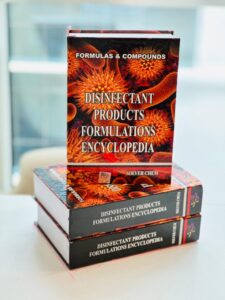
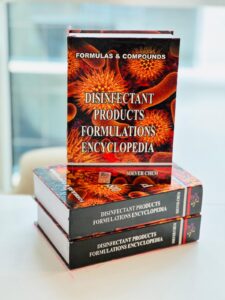
Discover 150+ industrial disinfectant formulations including tunnel disinfectants, alcohol-based systems, and advanced antimicrobial solutions in this comprehensive encyclopedia.
DISINFECTANT TUNNEL SOLUTION FORMULA (EXAMPLE)
A typical disinfectant tunnel formulation may include the following components:
- Ethanol or Isopropyl Alcohol (60–70%)
- Hydrogen Peroxide (0.5–3%)
- Nonionic Surfactant (0.5–2%)
- Stabilizer System (0.2–1%)
- Deionized Water (balance to 100%)
This type of formulation provides rapid antimicrobial action and uniform surface coverage.
STEP-BY-STEP PRODUCTION PROCESS
The production process must follow controlled conditions to ensure stability and effectiveness.
Water is first added to the mixing tank and agitation is started. Stabilizers are introduced and dissolved completely to prevent degradation of active ingredients.
Alcohol or hydrogen peroxide is then slowly added under continuous mixing. This step must be controlled to avoid evaporation losses and maintain formulation integrity.
Surfactants are incorporated to improve wetting and ensure uniform distribution of the disinfectant on surfaces.
The mixture is homogenized until a clear and stable solution is obtained. pH adjustment may be required depending on the formulation system.
Finally, the solution is filtered and transferred to storage tanks before packaging.
IMPORTANT FORMULATION CONSIDERATIONS
When producing disinfectant tunnel solutions, several key factors must be considered:
- Stability of active ingredients
- Compatibility of surfactants
- Evaporation control (for alcohol-based systems)
- Proper pH range
- Safe concentration levels
These parameters directly affect product performance and shelf life.
APPLICATION AREAS
Disinfectant tunnel solutions are used in:
- Poultry and livestock farms
- Food processing facilities
- Industrial hygiene stations
- Public sanitation tunnels
- Hospitals and laboratories
They provide fast and efficient disinfection in high-traffic environments.
👉 For complete formulation details, read:
Disinfectant Tunnel Solution Formulation | Ingredients, Production Process and Industrial Applications
SUMMARY
Learning how to make disinfectant tunnel solutions allows manufacturers to produce highly effective and stable disinfectants for industrial and commercial use. Proper formulation and production techniques are essential to ensure performance, safety, and consistency.