

Soil is a living community, requiring a balance of components. Soil has microorganisms, nutrients, minerals, water and oxygen. All of these elements contribute to healthy plant growth. Good soil means well-fed plants that bloom more abundantly and produce bigger and longer-lasting flowers. Attention to your soil is the best way to make your plants look their best. It’s easy to find out the quality of your soil – and it’s easy to improve it.
There are three different types of soil. Consider the list below to determine yours. If you are still unsure, visit your local garden center. They are experts in your region’s conditions and are there to help.
Clay soils have the smallest particles that hold together in a tight mass. If your soil sticks to your shovel, or if it becomes rock hard and refuses to absorb water when dry, you’ve got mostly clay soil, which can be hard for roots to penetrate.
Sandy soils have the largest particles that barely hold together at all. If water endlessly seeps into your soil, or if it is very easy to dig when wet or dry, you have mostly sand – which is often not very fertile.
Loam is a general word for near-perfect soil that has lots of organic matter, enough sand to be easy to dig in, but sufficient clay to provide fertility and solid anchoring for plants.
What Makes Things Grow
Fertile soil makes plants grow. Most soils need to be improved to make plants perform well and be more resistant to pests and disease.
Fertile soil is dark in color because it contains organic matter – which has decomposed into a form that plants can use. Adding lots of organic material will reward you by producing faster growth on more beautiful plants and flowers.
You can add organic material to your soil any time you wish. Large quantities of organic material help cure heavy clay soils and fast draining sand and add micro-organisms and minerals to build up weak soils. Just remember that it doesn’t last forever, so plan on adding organic material every year or so.
You can amend your soil in various ways:
- Make your own compost or purchase soil amendment that is rich in organic matter
- When adding a new plant to your garden, work the amendment into the soil in the bottom of your planting hole and mix with the existing soil as you pack it around the root ball.
- Improve the soil over an entire planting area by spading the amendment in several inches deep.
- Cultivate the organic material into the surface of the soil around older plants that can use a boost.
What’s going on down under?
To find out what’s going on in your soil, dig a test hole two feet deep and look at the sidewall to tell if there is a lighter colored layer under the topsoil. Rich, healthy soil tends to be a darker color, so you can see
To evaluate drainage conditions, fill the hole with water. If it drains away in an hour you have great drainage. If it takes a day you have slow drainage. If it sits overnight or longer, you have poor drainage. If you have poor drainage, add more organic material and try the drainage test again.
The pH scale indicates acidity or alkalinity. A soil with a pH number below 7 is acid, while one with a pH above 7 is alkaline. Garden plants typically grow best in neutral or slightly acid soil and you need not be concerned with pH unless your soil is one extreme or the other. Many good garden centers will gladly test a soil sample for pH levels for you, or you can buy an inexpensive pH test.
Acid soils are all soils that test lower than pH 7.0, which includes most soils east of the Mississippi River. In reality, most of these soils do not have significant acidity problems. Soils with pH levels below 6.0 may need special treatment or plant selection. Plants that will do well in acidic soil include Azaleas, Camellias, Rhododendrons, Blueberries and Japanese Maples.
Lime, available in either ground or powdered form, is often suggested to raise pH levels. Ground limestone is the slightly less potent of the two and raises pH more slowly. The amount needed depends on the soil texture (more is needed for clay than for sandy soil, for example). Or try adding your old coffee grounds to acid-loving plants.
Alkaline soils often occur in arid regions that receive less than 25 inches of rain per year. The majority of the soils west of the Missouri River are alkaline. Many plants popular for water-wise gardens do well in alkaline soil. The olive, native to the Mediterranean basin, is one example of a plant that thrives in alkaline soil; lavender and pomegranate also perform well.
To lower pH, ferrous sulfate and aluminum sulfate are often recommended. Ferrous sulfate, which also adds iron to the soil, is of the most help to plants that show yellow leaves as well as overall poor health. You’ll also lower the pH of alkaline soil over time by regularly applying organic amendments such as compost.
ORGANİC FERTILIZERS AND PRODUCTIONS
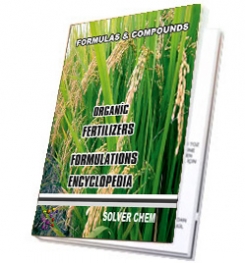
any liquid and solid organic fertilizer,
ORGANIC
FERTILIZERS
FORMULATIONS
ENCYCLOPEDİA
is enough.
This encyclopedia has many formulations about organic soil conditioner,humic acid productions,compositions,fulvic acid manufacturing,organic fertilizers,animal manure,amino acid organic fertilizers, organomineral powder fertilizers,organomineral liquid fertilizers productions,liquid root growth fertilizers formulas,granular root growth fertilizers,seaweed organic fertilizers,wermicompost fertilizers formulations,gel organic fertilizers,organomineral gel fertilizers manufacturing and any organic fertilizers etc.
All organic fertilizers in the encyclopedia are producible easily.You need no help and no technıcal support. The encyclopedia is enough to produce organic fertilizers itself.
ORGANIC
FERTILIZERS
FORMULATIONS
ENCYCLOPEDIA
is written clear and understandable.
RELATED TAGS: What is organic fertilizer,preparation of organic soil conditioner, liquid organic fertilizer manufacturing,animal manure manufacturing, manufacturing proces of animal manure,chicken manure,efficiency of humic acid in soil,effect of humic acid in plants, advantages of humic acid in agriculture, types of animal manure,seaweed fertilizer manufacturing process,production of liquid seaweed fertilizers, what is organic compost, preparation of organic compost,how to use organic compost,making organic compost, using of seaweed fertilizer,properties of seaweed organic fertilizers how to make liquid organic fertilizers, making organic compost,types of organic compost,manufacturing process of organic compost, how to make organic compost fertilizers, production of organic fertilizers,manufacturing process solid humic acid, formulation of humic acid,value of humic acid,manufacturing process of fulvic acid,how to produce humic acid,what is leoardite,where to use leonardite,types of leonardite,properties of leonardite,analyzes of leonardite,specification of leonardite, values of leonardite, what is leonardite humate,what is potassium humate, liquid humic acid preparation,powder humic acid production, granular soil conditioner manufacturing process, powder soil conditioner making,formulation of organic soil conditioner, making powder humic acid,humic acid production, composition of organic fertilizers,how to use organic fertilizers,why to use organic fertilizer,types of organic fertilizer,benefits of organic fertilizers,wermicompost fertilizers making, powder organic fertilizers,how to use organic fertilizers, making wermicompost fertilizer, formulation of seaweed fertilizers, amino acid fertilizer production,granular organic fertilizer,amino acid organic fertilizer manufacturing, properties of organic fertilizers, analyzes of organic fertilizer, specification of organic fertilizers, where to use organic fertilizers, what is soil amendments, humic acid making, how to make powder humic acid, manufacturing process of fulvic acid, herbal fulvic acid making, liquid humic acid process, formulation of humic acid,organic fertilizers for plants, organic fertilizers in agriculture, how to produce organic fertilizers, animal manure manufacturing process, herbal fertilizers, what is organic fertilizer compost, what is organic agriculture, how to make organic agriculture, advantages of organic fertilizers, effects of organic fertilizer, results of organic fertilizers, indications of organic fertilizers, symptoms of organic fertilizers, preparation of organic fertilizers, calculation of organic fertilizers, compounds of organic fertilizers,composition of liquid organic fertilizers, fertilization of organic fertilizers,why to use organic fertilizers.what is humate, types of humates,benefit of humate,potassium humate manufacturing process.,using powder soil conditioner, properties of granular soil conditioner,what is pellet organic soil conditioner.what is amino acid fertilizer, how to use organic amino acid fertilizsers,making amino acid fertilizers,formulation of amino acid fertilizers,manufacturing process of amino acid fertilizers, what is organic compost, where to use organic compost, types of organic compost in plants,benefits of organic compost in soil, preparation of organic compost in agriculture.
E – BOOKS AND HARD BOOKS
HOW TO BUY
AGRICULTURE ENCYCLOPEDIAS AND VIDEOS