
Soil is composed of sand, silt, clay and organic matter. The minute particles of sand and silt are bound by clay and organic matter into aggregates. These are the crumbs or lumps soil breaks into when you dig it. The technical term for them is peds.
The arrangement of aggregates gives soil its structure. Good soil structure has adequate spaces (pores) between aggregates to allow water and air to enter the soil and drain easily, while holding enough moisture to maintain plant growth. Poor soil structure has few aggregates and few pores between soil particles.
Digging
Digging a small hole 20–30cm deep will give you some idea of the structure and strength of your topsoil, although dry soils are often hard and not necessarily poorly structured. Dig the hole, take a slice off the side and carefully lift it out so it stays intact. Lay the slice on its side to examine it. A crumbly soil is usually softer and more encouraging to root and shoot development than a massive soil where soil particles are all the same size (such as fine silt), or cloddy soil which breaks apart into large clods and is difficult to break down further, or platey soil which breaks into flat plate-like layers (such as soil crusts).
Porosity
Examine the spadeful of soil closely for channels created by earthworms, ants, old plant roots and crack lines. These are very important features of a well-structured soil as they allow easy root penetration and water and air flow.
Composition
This exercise illustrates the proportions of gravel, sand, silt and clay in your soil.
- Place a cup of dry topsoil or subsoil in a 20-cm container (for example, a cordial bottle), fill with clean water and shake vigorously for a few minutes.
- Stand the bottle upright and watch carefully as the soil particles settle in the following order: gravel, sand, silt, clay. Most particles settle within five minutes. Some aggregates are so strong they will not break into particles and can be seen as lumps at the bottom.
- Any particles which have not settled after eight hours are clays which have dispersed. The individual clay particles move freely in water and do not clump together.
Texture
The combination of sand, silt and clay gives soil its texture. There are 19 soil textures, ranging from sand through loam to heavy clay. The following test helps you assess the texture of your soil.
- Take a small handful of topsoil or subsoil and remove any gravel, stones, leaves and twigs. Break up any aggregates.
- Adding a drop of water at a time, knead the soil in your palms to make a small ball about 4 cm in diameter. Stop adding water as soon as the ball starts to stick to your hand, and knead for another 30 seconds. You will find it almost impossible to mould a ball with very sandy soil, and much easier with a clay soil.
- Press the ball between your fingers to determine its texture. A gritty feel indicates fine and coarse sand. (You can hear the sand grinding if you hold the ball to your ear.) A silky feel indicates silt, and a plastic, sticky feel indicates clay.
- You can also determine texture by making a soil ribbon. Press the ball between your thumb and forefinger. The longer the ribbon, the more clay is in your soil.
Dispersibility and slaking
It is important to test for dispersibility and slaking if you plan to clear land for cultivation or build earthworks. In dispersible soils, moist or wet clay breaks up into individual clay particles due to a chemical reaction between water and sodium in the clay. These particles block the soil pores and seal the soil surface. This is good for dam building, but not for pastures or crops, because water and roots will have difficulty penetrating the soil.
Slaking occurs in poorly structured soils when dry soil is wet rapidly. Water moves into the pores and forces air out. The force of the escaping air causes the aggregate to burst and break down into smaller particles. These wash into the soil and block soil pores, and form a crust on the soil surface.
- Drop a few pea-sized air-dry aggregates into a dish of rainwater or irrigation water.
- Observe immediately, and after 10 minutes, then leave undisturbed for two hours.
- If the water around the aggregates becomes cloudy it means the clay in the aggregate has separated into individual particles and dispersion has occurred.
- If the aggregates crumble into smaller fragments in the first 10 minutes, there is not enough organic matter to hold them together, and the soil is said to have slaked.
- If the aggregates remain intact, there is enough organic matter to keep them together, so conditions are excellent for plant growth. The pores will remain open after wetting and water will drain quickly. Roots will penetrate easily and there will be no hard crust on drying.
Plasticity
This test helps you decide if your soil is too wet for vehicle/animal traffic or cultivation.
Rapidly squeeze a small lump of soil into a ball and attempt to roll it into a 3-mm diameter rod. If you can make a cohesive rod easily the soil is too wet and should not be worked with machinery. If you cannot make a rod at all, then it is only suitable to cultivate if it is a clay soil; if it is a loam, this indicates the soil is too dry to cultivate. If you can just make a crumbly rod, the water content should be right for cultivating all soil types
ORGANİC FERTILIZERS AND PRODUCTIONS
any liquid and solid organic fertilizer,
ORGANIC
FERTILIZERS
FORMULATIONS
ENCYCLOPEDİA
is enough.
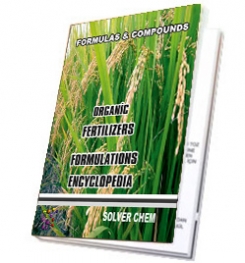
This encyclopedia has many formulations about organic soil conditioner,humic acid productions,compositions,fulvic acid manufacturing,organic fertilizers,animal manure,amino acid organic fertilizers, organomineral powder fertilizers,organomineral liquid fertilizers productions,liquid root growth fertilizers formulas,granular root growth fertilizers,seaweed organic fertilizers,wermicompost fertilizers formulations,gel organic fertilizers,organomineral gel fertilizers manufacturing and any organic fertilizers etc.
All organic fertilizers in the encyclopedia are producible easily.You need no help and no technıcal support. The encyclopedia is enough to produce organic fertilizers itself.
ORGANIC
FERTILIZERS
FORMULATIONS
ENCYCLOPEDIA
is written clear and understandable.
RELATED TAGS: What is organic fertilizer,preparation of organic soil conditioner, liquid organic fertilizer manufacturing,animal manure manufacturing, manufacturing proces of animal manure,chicken manure,efficiency of humic acid in soil,effect of humic acid in plants, advantages of humic acid in agriculture, types of animal manure,seaweed fertilizer manufacturing process,production of liquid seaweed fertilizers, what is organic compost, preparation of organic compost,how to use organic compost,making organic compost, using of seaweed fertilizer,properties of seaweed organic fertilizers how to make liquid organic fertilizers, making organic compost,types of organic compost,manufacturing process of organic compost, how to make organic compost fertilizers, production of organic fertilizers,manufacturing process solid humic acid, formulation of humic acid,value of humic acid,manufacturing process of fulvic acid,how to produce humic acid,what is leoardite,where to use leonardite,types of leonardite,properties of leonardite,analyzes of leonardite,specification of leonardite, values of leonardite, what is leonardite humate,what is potassium humate, liquid humic acid preparation,powder humic acid production, granular soil conditioner manufacturing process, powder soil conditioner making,formulation of organic soil conditioner, making powder humic acid,humic acid production, composition of organic fertilizers,how to use organic fertilizers,why to use organic fertilizer,types of organic fertilizer,benefits of organic fertilizers,wermicompost fertilizers making, powder organic fertilizers,how to use organic fertilizers, making wermicompost fertilizer, formulation of seaweed fertilizers, amino acid fertilizer production,granular organic fertilizer,amino acid organic fertilizer manufacturing, properties of organic fertilizers, analyzes of organic fertilizer, specification of organic fertilizers, where to use organic fertilizers, what is soil amendments, humic acid making, how to make powder humic acid, manufacturing process of fulvic acid, herbal fulvic acid making, liquid humic acid process, formulation of humic acid,organic fertilizers for plants, organic fertilizers in agriculture, how to produce organic fertilizers, animal manure manufacturing process, herbal fertilizers, what is organic fertilizer compost, what is organic agriculture, how to make organic agriculture, advantages of organic fertilizers, effects of organic fertilizer, results of organic fertilizers, indications of organic fertilizers, symptoms of organic fertilizers, preparation of organic fertilizers, calculation of organic fertilizers, compounds of organic fertilizers,composition of liquid organic fertilizers, fertilization of organic fertilizers,why to use organic fertilizers.what is humate, types of humates,benefit of humate,potassium humate manufacturing process.,using powder soil conditioner, properties of granular soil conditioner,what is pellet organic soil conditioner.what is amino acid fertilizer, how to use organic amino acid fertilizsers,making amino acid fertilizers,formulation of amino acid fertilizers,manufacturing process of amino acid fertilizers, what is organic compost, where to use organic compost, types of organic compost in plants,benefits of organic compost in soil, preparation of organic compost in agriculture.
E – BOOKS AND HARD BOOKS
HOW TO BUY
AGRICULTURE ENCYCLOPEDIAS AND VIDEOS
.