
During the first 3 to 4 years in the life of a newly planted fruit tree, it is important to follow the cultural steps outlined below in order to ensure success in growth, development, and quality fruit production. We discuss the most important aftercare principles below, assuming proper planting technique was applied as described in the factsheet entitled “Planting Containerized Fruit Trees.”
Watering: Newly planted trees only have the roots that grew in their containers or if planted as “bare root,” only those that are visible. Once planted, keeping this rootball moist is critical for survival. The rule of thumb for a fruit tree throughout its life is to water deeply but infrequently. Keep your soils moist but not saturated. Too much water or waterlogged soils will displace oxygen that roots need for survival.
A twice-a-week deep watering during the first and second growing seasons is usually enough to keep the rootball moist. This can be accomplished by flooding the planting well with water (the area inside the berm or basin). Trees in heavy clay soils may be better off with a bi-weekly watering; those in very sandy soils may need twice a week, or more. The watering schedule may need to be modified upwards of three times per week during the hottest time of the year and then reduced significantly or not at all during the rainy season.
Watch fruit trees for signs of drought stress, which may appear as loss of leaf sheen, wilting, and leaf drop. It is also important to avoid overwatering, which can often result in symptoms similar to not watering enough. In order to determine water needs, feel the soil about 4 to 6 inches from the base of the tree, at about 6-10 inches deep (you can use a shovel to pull back the soil). If the soil is moist at this depth, then there is no need for irrigation. Standing pools of water in the basin for 24 hours or more can be a sign of poor drainage and/or overwatering. As the tree matures, water applications should be located towards the edge or just within the tree’s canopy or drip line and outwards.
Mulching: Mulch around the base of the tree. Mulch is organic matter that is applied to the area around the base of the tree. Mulch acts as a covering that holds moisture in the soil, can reduce soil temperature extremes (both hot and cold), prevents weed germination and competition, and can improve soil quality as it decomposes by making soils more friable while slowly feeding microorganisms in the soil that release nutrients to your plants. Lastly, a thick mulch can provide improved aesthetic qualities. The best choices for mulch include coarse materials like shredded bark or wood chips, but other good choices include straw, leaf litter, and home compost. Apply much in 3 to 6 inch layers without touching the base of the tree, which can cause decay at the trees crown. Taper the mulch so that it is thicker as you move away from the tree’s crown.
Pruning: The first 3 to 4 years in the life of a fruit tree needs to be focused on the development of the main structure of the tree (i.e. main scaffold limbs and lateral branches) and not on fruit production. As the tree matures and fruit begins to develop, pruning will be focused on methods that will encourage better fruit production while maintaining the health and structural integrity of your fruit tree. Generally speaking, pruning should take place during the winter months for deciduous fruit trees, when the tree is in dormancy and is thus less susceptible to trauma and stress, and should be done once a year, however, summer pruning is important for training in the early life of a fruit tree. Summer pruning can also be used on mature trees to maintain tree size. Please see our factsheet entitled “Pruning” for more detailed instructions.
Fertilization: Fertilization at planting time is normally not necessary, though an organic slow release application may promote stronger root growth during winter dormancy. A fertilizer that is higher in phosphorus and potassium and lower in nitrogen is preferred to promote better root growth, winter hardiness, and fruit production. For fruit or nut trees, follow the recommendations for the specific crop after the new tree has become established for at least one growing season. Excess fertilizers can be a stressor, especially at planting time, so be careful not to over-apply.
Staking: Stake the tree, only if necessary. If the tree is well-grown with a sturdy trunk, staking for support is not necessary in most situations. Trees will establish more quickly and develop a stronger trunk and root system if they are not staked at the time of planting. Protective staking may be necessary in some situations where vandalism, windy conditions or other concerns may prevent the tree from developing a straight trunk. If staking is necessary for support, always use two stakes opposite each other with a wide, flexible tie material (narrow, or sharp-edged ties are more likely to cause friction wounds on the trunk). Stakes should be placed perpendicular to the direction of the prevailing wind. Be careful not to drive the stake through the root ball and remember, flexibility is essential as this will help increase the trunk diameter, so the do not stake the tree too tightly and allow the tree to have a natural degree of movement. Tie the tree to the stake using a figure-eight pattern at the lowest point possible that provides the necessary support. Remove stakes after the first year of growth when the tree has stabilized.
FERTILIZERS AND PRODUCTIONS
any liquid and solid fertilizer,
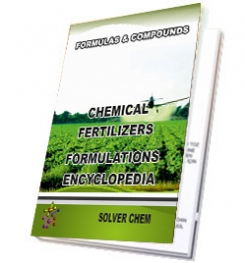
CHEMICAL
FERTILIZERS
FORMULATIONS
ENCYCLOPEDİA
is enough.
This encyclopedia has many formulas about NPK fertilizers,NP fertilizers,liquid poliar fertilizers, powder fertilizers, granulas fertilizers, calcium and potasium fertilizers, special fertilizers, dripping fertilizers,foliar fertilizers, edta chelated fertilizers, micronutrients fertilizers,macronutrients fertilizers,chelated fertilizers etc.
All chemical fertilizers in the encyclopedia are producible easily.You need no help and no technıcal support. The encyclopedia is enough to produce chemical fertilizers itself.
CHEMICAL
FERTILIZERS
FORMULATIONS
ENCYCLOPEDIA
is written clear and understandable.
RELATED TAGS: What is powder fertilizer,what is double fertilization, importance of fertilization in plants, making phosphorus fertilizers, how to make liquid phosphoric acid fertilizers, making phosphate fertilizer, properties of solid fertilizers, effects of dripping fertilizers, benefits of granular fertilizer, advantages of foliar liquid fertilizers, formulations of liquid drip fertilizer,compounds of phosphorus fertilizers, powder powder nitrogen fertilizers making, properties of solid liquid balanced fertilizer, complex fertilizer composition,using liquid micronutrients fertilizers, solid microelement fertilizers,using micronutrient fertilizers,plants to calcium fertilizers, micronutrients fertilizers in agricultural, how to make microelement fertilizers,making powder micronutrient fertilizers,micro elements fertilizers,properties of edta chelated fertilizers, liquid foliar fertilizers, to make ammonium nitrate fertilizers, preparation of liquid phosphate fertilizers, production of copper fertilizers, NPK fertilizer production,productions, types of chemical fertilizers,fertilizer types, solid foliar fertilizers,micronutrient fertilizers, combi fertilizers, manufacturing fertilizers,how to use chemical fertilizers, foliar fertilizers, drip fertilizers, NPK fertilizers, balance fertilizers, to make balance fertilizers,powder fertilizers manufacturing,granules fertilizer making,compositions of fertilizers, formulations of fertilizers, how to programme of fertilizers, using fertilizers.
E – BOOKS AND HARD BOOKS
HOW TO BUY
AGRICULTURE ENCYCLOPEDIAS AND VIDEOS