INTRODUCTION
Epoxy floor coatings are widely used in industrial, commercial and residential applications due to their excellent durability, chemical resistance and strong adhesion properties. These coatings create a seamless and high-performance surface suitable for factories, warehouses, garages and heavy-duty environments.
In this guide, you will learn epoxy floor paint formulation, key raw materials, ingredients and step-by-step production process used in industrial manufacturing systems.
RAW MATERIALS USED IN EPOXY FLOOR COATING
- Epoxy resin (Bisphenol A or Bisphenol F types)
- Hardener (Polyamine or Polyamide curing agents)
- Fillers (Calcium carbonate, silica)
- Pigments (Titanium dioxide, iron oxides)
- Solvents (Xylene, butanol, alcohols)
- Additives (Dispersing agents, defoamers, leveling agents)
BASIC EPOXY FLOOR PAINT FORMULATION
Component – Function – Amount (%)
Epoxy Resin – Main binder – 40–60
Hardener – Curing agent – 10–25
Fillers – Improves strength – 10–20
Pigments – Color – 2–10
Solvents – Viscosity control – 5–15
Additives – Performance improvement – 1–3
This is a simplified formulation. Industrial epoxy systems may vary depending on application requirements.
EPOXY FLOOR PAINT PRODUCTION PROCESS
- Add epoxy resin into the mixing tank
- Add fillers and pigments and mix until homogeneous
- Add solvents slowly to adjust viscosity
- Add additives such as dispersing and leveling agents
- Mix until a uniform mixture is obtained
- Add hardener before application (two-component system)
After mixing, the product should be tested for viscosity, curing time and adhesion performance.
TYPES OF EPOXY FLOOR COATINGS
- Self-leveling epoxy coatings
- Solvent-based epoxy coatings
- Water-based epoxy coatings
- Heavy-duty industrial epoxy systems
- Anti-slip epoxy coatings
KEY PERFORMANCE FACTORS
- Proper resin-to-hardener ratio ensures curing performance
- Filler selection affects mechanical strength
- Pigment quality impacts color stability
- Surface preparation is critical for adhesion
- Environmental conditions affect curing time
IMPORTANT NOTE
This formulation is a basic example for educational purposes. Industrial epoxy floor coatings require optimized formulations, controlled processing conditions and application-specific adjustments.
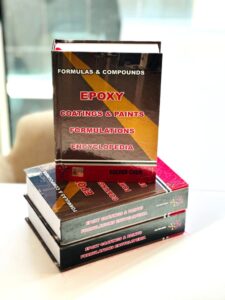
This basic formulation is only a small part of a much larger professional resource.
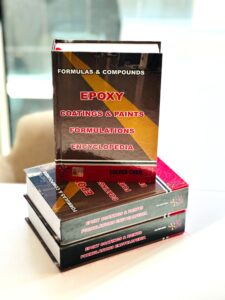
In our Epoxy Coatings and Paints Formulations Encyclopedia, you will find:
- 50+ industrial epoxy coating formulations
- Professional raw material combinations
- Step-by-step production processes
- Commercial and scalable recipes
- Industrial application techniques
Whether you are a manufacturer, entrepreneur or chemical engineer, this book provides everything you need to develop high-performance epoxy products.
👉 Click here to access the full Epoxy Coatings and Paints Formulations Encyclopedia
SUMMARY
Epoxy floor paint formulation requires a precise balance between resin, hardener, fillers and additives. A well-designed formulation improves durability, adhesion and chemical resistance, making epoxy coatings ideal for industrial and commercial applications.