Introduction
Epoxy putty products are everywhere today—from industrial repair applications to construction, automotive maintenance, and even DIY markets. But behind every high-performance epoxy putty product, there is one critical factor that separates average products from professional-grade systems: the formulation.
Most people can find basic information about epoxy putty online. However, when it comes to real production-ready formulations, correct raw material selection, and scalable manufacturing processes, reliable information becomes extremely limited.
If you are planning to develop your own epoxy putty product, improve an existing formulation, or enter the industrial chemicals market, understanding the exact formulation logic and production process is not optional—it is essential.
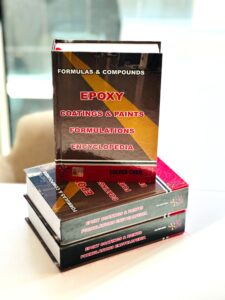
Right after this point, you should position your book visual.
Why Epoxy Putty Formulation Matters in Industrial Production
Not all epoxy putties are created equal. The difference between a product that cracks, shrinks, or fails and one that delivers strong adhesion, chemical resistance, and durability comes down to formulation design.
A properly engineered epoxy putty formulation must balance:
- Resin and hardener compatibility
- Filler systems and mechanical strength
- Workability and application time
- Adhesion to multiple surfaces
- Chemical and environmental resistance
Without this balance, even small formulation mistakes can lead to product failure in real applications.
This is exactly why many manufacturers struggle during product development—they lack access to tested and structured formulation systems.
Core Structure of Epoxy Putty Systems
Industrial epoxy putty formulations are typically designed as two-component systems:
Component A (Base System)
- Epoxy resin
- Fillers (calcium carbonate, silica, etc.)
- Plasticizers and modifiers
- Pigments (optional)
Component B (Hardener System)
- Amine-based curing agents
- Accelerators
- Additives for curing control
When these two components are mixed, a chemical reaction starts, forming a solid, highly resistant material.
But here’s the critical point:
👉 The performance of the final product depends entirely on the ratio, quality, and compatibility of these components.
Production Process Overview
Epoxy putty production is not just about mixing materials. It requires a controlled and systematic approach to ensure product consistency and performance.
A typical industrial production process includes:
- Preparation of base resin system
- Gradual incorporation of fillers for proper dispersion
- Adjustment of viscosity and workability
- Preparation of curing component separately
- Packaging in dual systems or separate containers
Even small deviations in mixing sequence or raw material quality can affect curing time, strength, and final performance.
That’s why professional manufacturers rely on standardized production methods and exact formulation ratios.
Common Challenges in Epoxy Putty Manufacturing
Many producers face similar issues when developing epoxy putty products:
- Incorrect curing time (too fast or too slow)
- Poor adhesion on metal, concrete, or plastic
- Cracking after application
- Low chemical resistance
- Inconsistent batch quality
These problems are rarely solved by trial and error alone. They require proven formulation systems and technical knowledge.
How to Develop a Competitive Epoxy Putty Product
If your goal is not just to make a product but to build a sellable, industrial-grade solution, you need:
- Tested formulations based on real production conditions
- Correct raw material combinations
- Scalable 100 kg batch systems
- Clear production process guidelines
This is exactly where most online resources fall short—they explain concepts but don’t provide ready-to-use formulation systems.
Final Step: Access Professional Epoxy Formulations
If you are serious about entering the epoxy putty or industrial coatings market, working with incomplete or generic information will only slow you down.
The EPOXY COATINGS and PAINTS FORMULATIONS ENCYCLOPEDIA provides:
- Professional epoxy putty formulations
- Industrial coatings and paint systems
- 100 kg production-based recipes
- Real manufacturing process details
- Raw material structures used in industry
Instead of spending months testing and guessing, you can directly work with proven systems used in real production environments.
SUMMARY
Epoxy putty production is a highly technical process where formulation design determines product success. While basic information is widely available, industrial-level formulations and scalable production methods are not easily accessible.
For manufacturers, entrepreneurs, and product developers, the fastest and most reliable way to succeed is to work with structured, tested, and production-ready formulation systems.