Professional acrylic paint formulations depend on the right balance of resin, pigments, fillers, solvents and performance additives. Acrylic resin is commonly used as the main binder, while materials such as talc, calcite, xylene, wetting agents, flow-control additives, bentonite and pigment powders or pastes help define the final paint properties.
Depending on the product type, formulations may also include isobutyl acetate, zinc phosphate and other functional raw materials. The exact combination and ratios can significantly affect adhesion, coverage, flow, drying and overall finish.
For manufacturers looking for complete formulations and practical production guidance, our
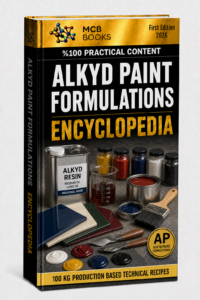
Acrylic Paint Formulations Encyclopedia
provides multiple professional solutions for commercial paint production.

ACRYLIC PAINT FORMULATIONS ENCYCLOPEDIA
Looking for complete acrylic paint formulations for professional production?
The
ACRYLIC PAINT FORMULATIONS ENCYCLOPEDIA
is designed for manufacturers, chemical professionals and entrepreneurs who want practical formulation options and clear manufacturing guidance for commercial acrylic paint production.
Explore professional formulations, raw material combinations and production methods for developing different types of acrylic paints.
What Makes a Good Acrylic Paint?
A good acrylic paint should offer smooth application, strong adhesion, good coverage and a consistent finish. The final result depends on the correct balance of resin, pigments, fillers, solvents and functional additives.
Even small changes in the formulation can affect drying time, flow, gloss, hardness and surface appearance.
Acrylic Paint Manufacturing
The production process is just as important as the raw materials. Ingredients must be added in the correct order and mixed under suitable conditions to obtain a stable and homogeneous product.
Different acrylic paint types may require different resin systems, pigment combinations and production methods depending on the intended use and final performance.
For Commercial Production
For manufacturers, one basic formula is usually not enough. Different markets may require matte, gloss, interior, exterior, solvent-based or specialty acrylic paint products.
This is why having access to several formulation options can make product development faster and more practical.
Summary
Professional acrylic paint formulations require the right raw materials, correct ratios and a controlled manufacturing process.
If you are planning commercial acrylic paint production,
the
ACRYLIC PAINT FORMULATIONS ENCYCLOPEDIA
provides practical formulation options and manufacturing guidance for developing different acrylic paint products.
Explore the complete encyclopedia and find the formulation solutions that best fit your production needs.