 Introduction
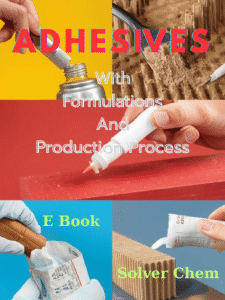
Starch adhesives are natural, biodegradable glues produced from plant-derived starches such as corn, wheat, potato, or tapioca. They are widely used in paper converting, bookbinding, corrugated cardboard manufacturing, labeling, and packaging due to their low cost, environmental safety, and excellent bonding performance with porous substrates.
This article explains the production principles, formulation basics, processing steps, applications, advantages, and material composition of starch-based adhesives.
What Are Starch Adhesives
Starch adhesives are water-based bonding materials made primarily from modified or unmodified starch granules. When heated with water, starch gelatinizes and forms a viscous, tacky adhesive suitable for paper and packaging industries.
Raw Materials Used in Starch Adhesive Production
-
Starch (corn, wheat, potato, tapioca)
-
Water
-
Caustic soda or soda ash (alkali for gelatinization)
-
Borax (viscosity modifier & tack enhancer)
-
Preservatives (anti-mold agents)
-
Modified starches or dextrin (optional)
-
Plasticizers (glycerin, sorbitol)
-
Fillers (optional—depending on application)
Starch Adhesive Production Process
1. Slurry Preparation
Starch is mixed with cold water to form a uniform suspension.
2. Gelatinization
The slurry is heated while an alkali is added. Starch granules swell and burst, forming a homogeneous paste.
3. Cooking Stage
Temperature is increased to fully hydrate the starch and develop viscosity.
4. Cooling Phase
The adhesive mass is cooled to the desired temperature.
5. Additives Incorporation
Borax, preservatives, plasticizers, or modifiers are added to adjust tack, stability, or drying behavior.
6. Final Homogenization
The batch is mixed until smooth and consistent.
7. Filtration & Packaging
The adhesive is filtered and filled into drums, totes, or bulk containers.
Types of Starch Adhesives
-
Native starch adhesives
-
Modified starch adhesives
-
Dextrin-based adhesives
-
Liquid starch adhesives
-
Corrugating starch adhesives (carrier + primary mix)
Applications of Starch Adhesives
-
Corrugated board production
-
Paper bag and sack manufacturing
-
Tube winding and core making
-
Bookbinding
-
Labeling
-
Laminating paper and board
-
Envelope production
-
General paper converting
Properties of Starch Adhesives
-
High initial tack
-
Excellent adhesion to cellulose-based substrates
-
Biodegradable and food-safe
-
Cost-effective
-
Adjustable viscosity
-
Heat and moisture sensitive (depending on formulation)
Advantages
-
Renewable and eco-friendly
-
Safe for food packaging
-
Economical for high-volume production
-
Easy to modify (viscosity, tack, drying rate)
Summary
Starch adhesive production involves preparing a starch slurry, gelatinizing it through controlled heating and alkalinity, blending additives to optimize performance, and homogenizing the final product. These adhesives are valued for their low cost, environmental friendliness, and strong compatibility with paper-based substrates. Their versatility makes them essential in packaging, paper converting, and corrugated board manufacturing.