 Overview
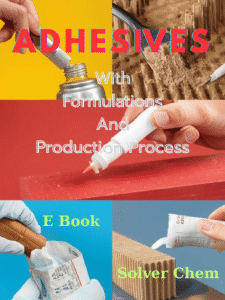
Adhesive bonding is a fundamental joining technology in which two substrates are permanently joined using an adhesive layer. It is widely used in construction, automotive, aerospace, packaging, woodworking, electronics, and composite manufacturing due to its strength, flexibility, and ability to bond dissimilar materials.
What Is Adhesive Bonding
Adhesive bonding refers to the process of joining surfaces using a liquid, paste, film, or solid adhesive that hardens through chemical or physical mechanisms.
It creates a strong, uniform stress distribution and eliminates the need for mechanical fasteners such as screws, bolts, or welding.
How Adhesive Bonding Works
Adhesive bonding relies on:
-
Adhesion: attraction between adhesive and substrate
-
Cohesion: internal strength of the adhesive
-
Surface wetting: adhesive must spread uniformly
-
Curing: physical drying or chemical reaction (polymerization)
Key Advantages
-
Bonds dissimilar materials (metal–plastic–glass–wood)
-
Provides lightweight, clean, uniform joints
-
Reduces stress concentration compared to welding or screws
-
Offers corrosion resistance—no holes or thermal distortion
-
Ideal for complex geometries and thin substrates
Applications of Adhesive Bonding
-
Woodworking and furniture panels
-
Composite bonding in transportation
-
Packaging, bookbinding, and paper converting
-
Leather, textile, and footwear manufacturing
-
Construction materials & insulation systems
-
Metal–metal or metal–plastic industrial assembly
Types of Adhesives Used in Bonding
Common adhesive groups include:
-
Waterborne adhesives
-
Acrylic & methacrylate adhesives
-
Polyurethane adhesives (1K, 2K, 3K, solvent-free, water-based)
-
Epoxy adhesives (1K, 2K, 3K)
-
Hotmelt adhesives
-
Starch & dextrin adhesives
-
Silicone adhesives
-
Natural & animal glues
-
Pressure-sensitive adhesives (PSA)
Bonding Mechanisms
Bond strength develops through:
-
Mechanical interlocking
-
Chemical bonding
-
Electrostatic attraction
-
Diffusion between polymer chains
Summary
Adhesive bonding is a versatile, efficient, and modern joining method replacing mechanical fasteners and welding in many industries. Its ability to join dissimilar materials, improve aesthetics, reduce weight, and enhance durability makes it essential in advanced manufacturing sectors. A wide variety of adhesives—epoxy, polyurethane, acrylic, waterborne, hotmelt, dextrin, silicone, and natural systems—are developed to meet performance requirements for every application.