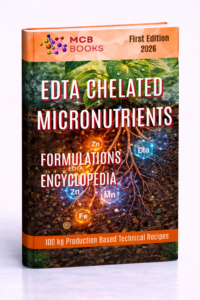
What Are EDTA Chelated Micronutrients is one of the most common questions in modern fertilizer technology and agricultural nutrition systems. EDTA chelated micronutrients are designed to improve the stability and availability of important trace elements such as iron, zinc, manganese and copper. These systems help prevent nutrient loss and allow plants to absorb micronutrients more efficiently under different soil and irrigation conditions.
What Are EDTA Chelated Micronutrients is also an important topic for fertilizer manufacturers, hydroponic growers and foliar fertilizer producers because chelation technology increases nutrient efficiency and supports healthier plant development. EDTA chelates are widely used in drip irrigation systems, foliar sprays and water soluble fertilizer formulations where stable micronutrient performance is required.
What Are EDTA Chelated Micronutrients?
EDTA chelated micronutrients are micronutrient fertilizers in which metal ions (such as Fe, Zn, Mn, Cu) are chemically bound to a chelating agent called EDTA (ethylenediaminetetraacetic acid). This binding forms a stable complex that protects the nutrient from reacting with soil components that would otherwise make it insoluble.
In simple terms, EDTA acts like a “protective shield” around the nutrient, keeping it available for plant uptake. Without chelation, micronutrients can quickly become fixed in the soil and unusable by plants.
How EDTA Chelation Works
Chelation is a chemical process where EDTA binds to a metal ion at multiple points, forming a stable ring-like structure. This structure prevents the nutrient from interacting with substances such as calcium, carbonates, or phosphates in the soil.
As a result:
- Nutrients remain in soluble form
- They move easily in the soil solution
- They are readily absorbed by plant roots
This mechanism significantly improves nutrient efficiency compared to non-chelated forms.
Common Types of EDTA Chelated Micronutrients
The most widely used EDTA chelated micronutrients include:
- Fe-EDTA (Iron EDTA) → Prevents chlorosis and improves photosynthesis
- Zn-EDTA (Zinc EDTA) → Supports growth hormones and enzyme activity
- Mn-EDTA (Manganese EDTA) → Enhances photosynthesis and metabolism
- Cu-EDTA (Copper EDTA) → Improves plant structure and disease resistance
These micronutrients are often used individually or in multi-micronutrient blends.
Why EDTA Chelated Micronutrients Are Important
1. Improved Nutrient Availability
In many soils, especially high pH soils, micronutrients become unavailable. EDTA prevents this by keeping nutrients soluble.
2. Higher Nutrient Efficiency
Chelated nutrients are absorbed more efficiently, meaning lower application rates are needed.
3. Faster Plant Response
Plants show quicker improvement after application, especially when used as foliar sprays.
4. Suitable for Multiple Application Methods
- Soil application
- Foliar spraying
- Fertigation systems
5. Reduced Nutrient Loss
Chelation minimizes losses due to precipitation and fixation.
Where Are EDTA Chelates Used?
EDTA chelated micronutrients are widely used in:
- Field crops (wheat, corn, rice)
- Vegetables (tomatoes, peppers, leafy greens)
- Fruit trees (citrus, grapes, apples)
- Greenhouse and hydroponic systems
They are especially effective in alkaline soils, where micronutrient deficiencies are most common.
Advantages Over Traditional Micronutrients
Compared to sulfate or oxide forms:
- More stable in soil
- Less affected by pH
- Better absorption by plants
- Lower application rates required
These advantages make EDTA chelates a preferred choice in modern agriculture.
Limitations of EDTA Chelates
Despite their benefits, EDTA chelates have some limitations:
- Reduced stability in very high pH soils (especially for iron)
- Higher cost compared to traditional fertilizers
- Persistence in the environment (slow biodegradation)
For extremely alkaline soils, stronger chelates like EDDHA may be more suitable.
Practical Application Tips
To get the best results:
- Apply during active growth stages
- Use foliar application for rapid correction
- Combine with balanced fertilization programs
- Avoid overapplication to prevent nutrient imbalance
EDTA chelated micronutrients are a highly effective solution for improving nutrient availability and plant uptake in modern agriculture. By protecting essential micronutrients from soil reactions, they ensure consistent nutrition, better plant growth, and higher crop yield. Their versatility and efficiency make them an essential component of advanced fertilizer programs.