Gibberellic Acid (GA3) is one of the most widely used plant growth regulators in modern agriculture. It plays a critical role in enhancing seed germination, promoting stem elongation, increasing fruit size, and improving overall crop productivity. Due to its strong physiological effects and high demand, GA3-based formulations have become an essential segment of the agrochemical industry.
However, producing a stable and effective GA3 formulation is not a simple task. The active ingredient is sensitive to environmental factors such as light, pH, and temperature. Therefore, understanding the correct formulation techniques and production processes is crucial for manufacturers and professionals in the agricultural sector.
In this guide, we will explore the complete production process of GA3 formulations, including raw materials, formulation types, step-by-step manufacturing methods, and key technical considerations.
RAW MATERIALS USED IN GA3 FORMULATIONS
The quality and stability of a GA3 formulation depend heavily on the selection of raw materials. A standard formulation includes the following components:
1. Active Ingredient
- Gibberellic Acid (GA3)
- Typically available in technical grade (90%–95% purity)
2. Solvents
- Ethanol or isopropanol
- Used to dissolve GA3 due to its low water solubility
3. Surfactants
- Nonionic surfactants (e.g., ethoxylated alcohols)
- Improve spreading and absorption on plant surfaces
4. Stabilizers
- Antioxidants and UV stabilizers
- Protect GA3 from degradation
5. Buffers
- Maintain optimal pH (usually slightly acidic)
- Prevent hydrolysis and decomposition
6. Carriers (for solid formulations)
- Kaolin, silica, or inert fillers
Each component must be carefully balanced to ensure maximum effectiveness and shelf life.
TYPES OF GA3 FORMULATIONS
Different crops and application methods require different formulation types.
1. Soluble Powder (SP)
- Most common form
- Easily dissolves in water
- Ideal for foliar spray applications
2. Liquid Concentrate (SL)
- Ready-to-use liquid formulation
- Faster absorption
- Requires advanced stabilization
3. Effervescent Tablets
- Convenient for small-scale use
- Precise dosing
4. Granular Formulations
- Used for soil application
- Controlled release properties
GENERAL PRODUCTION PRINCIPLES
Before diving into the detailed process, it is important to understand key formulation principles:
- GA3 must be protected from alkaline pH
- Exposure to UV light must be minimized
- Proper dispersion and solubilization are critical
- Formulations should ensure uniform distribution on plants
STEP-BY-STEP PRODUCTION PROCESS (LIQUID GA3 FORMULATION – SL)
Step 1: Preparation of Solvent Phase
A suitable solvent such as ethanol is added to a mixing tank. The solvent serves as the medium to dissolve GA3 efficiently.
Step 2: Dissolution of GA3
The technical GA3 is slowly added to the solvent under continuous stirring. Temperature is controlled (typically 20–30°C) to prevent degradation.
Step 3: Addition of Surfactants
Nonionic surfactants are introduced to improve wetting and spreading properties. This ensures better leaf coverage during application.
Step 4: Stabilization
Stabilizers and antioxidants are added to protect the formulation from oxidation and UV degradation.
Step 5: pH Adjustment
Buffers are added to maintain a slightly acidic pH (around 4–5), which is optimal for GA3 stability.
Step 6: Dilution with Water
Deionized water is added slowly while maintaining agitation to achieve the desired concentration.
Step 7: Filtration
The mixture is filtered to remove any undissolved particles or impurities.
Step 8: Filling and Packaging
The final product is filled into UV-protected containers to prevent light-induced degradation.
PRODUCTION PROCESS (SOLUBLE POWDER – SP)
Step 1: Pre-Mixing
GA3 technical material is blended with carriers such as silica or kaolin.
Step 2: Addition of Dispersants
Dispersing agents are added to improve solubility and prevent clumping.
Step 3: Grinding
The mixture is milled to achieve uniform particle size.
Step 4: Drying
Moisture content is reduced to ensure product stability.
Step 5: Sieving
The powder is sieved for uniformity.
Step 6: Packaging
Packed in moisture-proof bags.
QUALITY CONTROL PARAMETERS
To ensure product performance, several quality control tests are conducted:
- Active ingredient content (%)
- pH level
- Solubility and dispersibility
- Particle size (for powders)
- Stability under different conditions
Consistency in these parameters ensures reliable field performance.
COMMON PROBLEMS AND SOLUTIONS
Problem 1: Poor Solubility
- Solution: Use better solvents or co-solvent systems
Problem 2: Degradation of GA3
- Solution: Add stabilizers and maintain acidic pH
Problem 3: Phase Separation (Liquid Formulations)
- Solution: Optimize surfactant system
Problem 4: Short Shelf Life
- Solution: Improve packaging and storage conditions
ADVANCED GA3 FORMULATION TECHNOLOGIES
Modern formulation science has introduced innovative approaches:
Nano Emulsions
- Enhanced absorption
- Reduced dosage requirements
Microencapsulation
- Protects GA3 from environmental degradation
- Provides controlled release
Combination Formulations
- GA3 combined with auxins or cytokinins
- Synergistic plant growth effects
SAFETY AND HANDLING
Although GA3 is relatively safe, proper handling is essential:
- Use protective equipment
- Avoid inhalation and skin contact
- Store in cool, dry, and dark conditions
INDUSTRIAL APPLICATIONS AND MARKET DEMAND
The demand for GA3 formulations is growing due to:
- Increased need for high crop yields
- Expansion of commercial agriculture
- Adoption of precision farming techniques
GA3 is widely used in:
- Fruits (grapes, apples, citrus)
- Vegetables
- Cereals
- Ornamentals
LEARN PROFESSIONAL GA3 FORMULATIONS
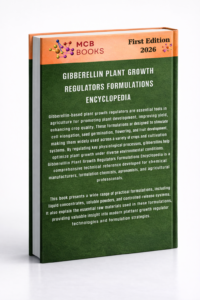
For professionals seeking advanced knowledge, the Gibberellin Plant Growth Regulators Formulations Encyclopedia provides:
- Industrial-grade formulations
- Detailed production methods
- Raw material selection strategies
- Commercial product insights
This resource is ideal for manufacturers, researchers, and entrepreneurs aiming to enter or expand in the agrochemical sector.
SUMMARY
Gibberellic Acid (GA3) formulations are essential tools in modern agriculture, offering significant benefits in plant growth, yield improvement, and crop quality. However, producing a stable and effective formulation requires a deep understanding of chemistry, formulation science, and process control.
From raw material selection to final packaging, each step plays a critical role in determining product performance. With advancements in formulation technologies, GA3 products are becoming more efficient, stable, and versatile.
For anyone involved in agricultural chemicals, mastering GA3 formulation techniques is a valuable step toward success in a rapidly growing industry.