Professional Herbicide Formulation Techniques for Manufacturers
Professional herbicide formulation techniques are essential for manufacturers aiming to produce high-quality, stable, and effective weed control products. In the modern agrochemical industry, formulation is not just about combining ingredients; it is a precise scientific process that determines the performance, safety, and commercial success of a herbicide. Manufacturers must apply advanced formulation strategies to meet increasing demands for efficiency, environmental safety, and regulatory compliance.

The first step in professional herbicide formulation is selecting the appropriate active ingredient based on target weed species, mode of action, and environmental conditions. The active ingredient must be compatible with the chosen formulation system and capable of delivering consistent performance. Once selected, manufacturers must determine the most suitable formulation type, such as emulsifiable concentrates (EC), suspension concentrates (SC), soluble liquids (SL), wettable powders (WP), or water-dispersible granules (WG). Each formulation type requires specific techniques and equipment.
Ingredient compatibility is one of the most critical aspects of professional formulation. Surfactants, emulsifiers, dispersants, stabilizers, and solvents must work together without causing instability. Advanced surfactant systems are used to improve spreading, wetting, and penetration of the herbicide on plant surfaces. Emulsifiers ensure stable mixing of oil-based components with water, while dispersants maintain uniform particle distribution in suspension formulations.
Particle size control is a key technique in modern herbicide formulation, especially for SC, WP, and WG formulations. Fine particle size improves dispersion, stability, and biological effectiveness. Manufacturers use advanced milling technologies such as bead mills and high-pressure homogenizers to achieve the desired particle size and consistency.
Process control is another essential element of professional herbicide formulation. Parameters such as temperature, mixing speed, pH, and order of ingredient addition must be carefully managed to ensure consistent results. Improper processing can lead to issues such as phase separation, sedimentation, or degradation of the active ingredient. Automated systems and real-time monitoring technologies are increasingly used to enhance precision and reduce production errors.
Stability optimization is also a major focus in professional formulation techniques. Manufacturers use stabilizers, buffering agents, and preservatives to maintain product integrity over time. Stability testing under different environmental conditions is essential to ensure that the herbicide remains effective during storage and application.
Quality control and testing are integral parts of the formulation process. Manufacturers must verify parameters such as viscosity, pH, particle size distribution, and active ingredient concentration. Consistent quality ensures reliable performance and compliance with industry standards.
Modern formulation techniques also emphasize sustainability and environmental safety. The use of biodegradable surfactants, low-toxicity solvents, and advanced delivery systems helps reduce environmental impact while maintaining high performance. These innovations are essential for meeting regulatory requirements and improving market acceptance.
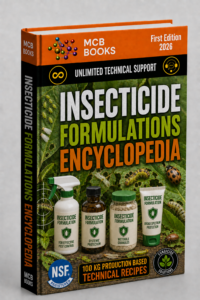
For professionals and manufacturers seeking advanced knowledge of herbicide formulation, the Herbicide Formulations Encyclopedia provides comprehensive insights into industrial techniques, raw material selection, and proven production methods used in the agrochemical industry.
In conclusion, professional herbicide formulation techniques require a combination of scientific expertise, advanced processing technologies, and precise quality control. By mastering these techniques, manufacturers can produce high-performance herbicides that meet the evolving demands of modern agriculture while ensuring efficiency, safety, and sustainability.