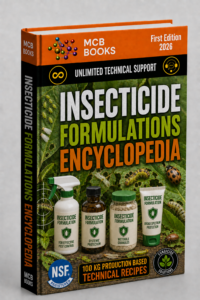
How to Improve Insecticide Efficiency with Advanced Formulations
Improving insecticide efficiency is a key objective for manufacturers and agricultural professionals seeking better pest control with lower costs and reduced environmental impact. While the active ingredient plays a major role in determining effectiveness, advanced formulation technologies are often the real factor that enhances performance in field conditions. By optimizing how the active ingredient is delivered, retained, and absorbed, modern formulations can significantly increase insecticide efficiency.
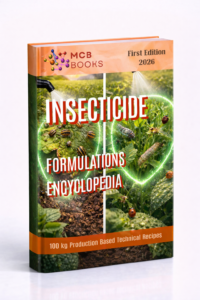
One of the most important strategies is optimizing the formulation type. Choosing between systems such as Emulsifiable Concentrates (EC), Suspension Concentrates (SC), Soluble Liquids (SL), or microencapsulated formulations can directly influence how the insecticide behaves after application. For example, microencapsulation allows controlled release of the active ingredient, ensuring longer residual activity and reducing the need for repeated applications.
Particle size control is another critical factor in advanced formulations. In suspension-based systems, reducing particle size increases the surface area of the active ingredient, improving its contact with target insects. Fine and uniform particles also enhance stability and ensure consistent distribution during spraying. Technologies such as bead milling and high-shear mixing are commonly used to achieve precise particle size optimization.
The use of high-performance surfactant systems significantly improves insecticide efficiency. Surfactants reduce surface tension, allowing the formulation to spread evenly across plant surfaces and insect bodies. Advanced surfactant blends can improve adhesion, penetration, and rainfastness, ensuring that the active ingredient remains effective even under challenging environmental conditions.
Another key approach is enhancing formulation stability. A stable insecticide maintains its physical and chemical properties over time, ensuring consistent performance. The use of stabilizers, antioxidants, and UV absorbers protects the active ingredient from degradation caused by heat, light, and oxidation. Improved stability leads to longer shelf life and better field reliability.
Controlled release technologies also play an important role in increasing efficiency. Systems such as microencapsulation or polymer-based carriers allow the gradual release of the active ingredient over time. This not only prolongs the insecticidal effect but also reduces environmental exposure and minimizes the total amount of chemical required.
pH optimization is another often overlooked factor. Many active ingredients are sensitive to pH changes, which can lead to degradation or reduced activity. Maintaining the optimal pH range through buffering systems helps preserve the effectiveness of the formulation and ensures consistent results during application.
Adjuvants and synergists can further boost performance. Synergists enhance the activity of the insecticide by inhibiting insect resistance mechanisms, while adjuvants improve spreading, sticking, and penetration. These additives allow manufacturers to achieve higher efficiency without increasing the concentration of the active ingredient.
In conclusion, improving insecticide efficiency requires a combination of advanced formulation techniques, precise process control, and smart ingredient selection. By focusing on delivery systems, stability, and performance-enhancing additives, manufacturers can develop highly effective insecticides that meet modern agricultural and environmental demands.