Flowering Enhancement Hormone Formulations
(Step-by-Step Production Process)
When it comes to improving crop performance, one of the most effective approaches is supporting the plant during its flowering stage. This is where flowering enhancement hormone formulations come into play. These products are designed to help plants transition smoothly into flowering, increase the number of blooms, and improve overall crop uniformity. For growers, this often means higher yield and better quality produce.
At the core of these formulations are plant hormones such as gibberellins, cytokinins, and sometimes auxins. Each of these has a specific role. Gibberellins are commonly used to trigger and accelerate flowering, especially in crops that are slow to respond. Cytokinins support cell division and help flowers develop more fully, while auxins contribute to balanced growth and can enhance the overall effectiveness of the system when used correctly.
The production process of flowering hormone formulations is not overly complicated, but it does require attention to detail. The first step usually involves preparing the solvent system. Since many plant hormones are not easily soluble in water, they are first dissolved in suitable solvents such as alcohol-based systems or glycol ethers. This ensures that the active ingredients are fully dispersed and stable.
Once the active ingredients are properly dissolved, surfactants are added. These components play an important role because they help the final product spread evenly on plant surfaces and improve absorption through leaves. Without proper surfactants, even a well-designed formulation may not deliver the expected results in the field.
After that, stabilizers and sometimes chelating agents are introduced into the mixture. Stabilizers help protect sensitive hormones from degradation over time, while chelating agents can improve compatibility and performance, especially when the product is used in different water conditions.
The next step is adjusting the pH of the formulation. This is a critical stage because plant hormones are often sensitive to pH changes. Keeping the formulation within an optimal pH range ensures both stability during storage and effectiveness during application.
Finally, the mixture is filtered to remove any undissolved particles and then filled into appropriate packaging. At this point, the product is ready for use or distribution.
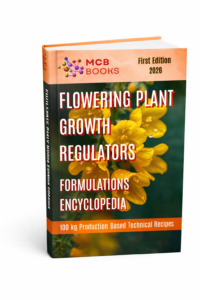
For those looking to develop their own formulations, the biggest challenge is usually getting the balance right. Small changes in ingredient ratios or processing steps can significantly affect performance. Instead of relying on trial and error, many professionals prefer using established formulation systems. The FLOWERING PLANT GROWTH REGULATORS FORMULATIONS ENCYCLOPEDIA offers practical, ready-to-use formulations along with detailed production insights, making it much easier to produce reliable and effective products.
In the end, successful flowering enhancement is not just about using hormones, but about delivering them in a stable, efficient, and well-formulated system.