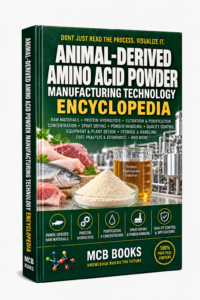
Fish amino acid can be manufactured efficiently from fish-processing waste, converting protein-rich by-products into a valuable agricultural raw material. Fish heads, frames, skin, viscera, trimmings, off-cuts, and other residues generated during seafood processing can all serve as potential feedstocks, provided that they are properly handled and suitable for industrial processing.
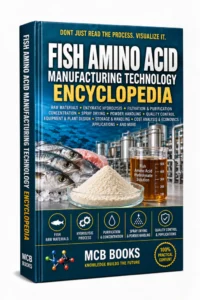
The first stage is raw material preparation. Fish waste is inspected to remove foreign materials and undesirable contaminants. Depending on the process, the material may be washed, drained, crushed, minced, or ground to create a more uniform feed. Reducing particle size improves contact between the fish proteins and the hydrolysis medium, helping the breakdown process proceed more consistently.
Hydrolysis is the most important step in fish amino acid production because it converts large protein molecules into smaller peptides and free amino acids. Industrial manufacturers may use enzymatic hydrolysis, acid hydrolysis, or controlled biological processing.
In enzymatic hydrolysis, protease enzymes are added under controlled temperature and pH conditions. The enzymes gradually break peptide bonds within fish proteins, producing a soluble hydrolysate containing amino acids and short-chain peptides. This method allows relatively mild operating conditions and can produce products with useful nutritional and biological properties.
Acid hydrolysis uses acidic conditions, usually combined with controlled heating, to break down proteins. It can achieve extensive protein decomposition but requires careful management of reaction conditions, corrosion-resistant equipment, neutralization, and downstream purification.
Once hydrolysis is complete, the reaction mixture contains soluble amino acids together with fats, suspended solids, bones, connective tissue residues, and other insoluble fractions. Screens, filters, decanters, or centrifuges can be used to separate these materials. Fat removal may also be necessary, especially when oily fish waste is used.
The clarified hydrolysate is then concentrated to obtain the required solids and nutrient content. Evaporation under controlled conditions is commonly used to remove excess water while limiting unnecessary thermal degradation. The concentrate may subsequently be standardized for parameters such as pH, nitrogen content, amino acid concentration, density, and organic matter.
For liquid fish amino acid products, the material can be filtered, stabilized, stored, and packaged after final quality adjustment. For powder production, the concentrated hydrolysate is dried using suitable industrial equipment such as spray dryers. The dried product is then milled, sieved, and packed as a free-flowing powder.
Quality control is essential throughout the manufacturing process. Typical tests include free amino acid content, total nitrogen, moisture, pH, solubility, organic matter, microbiological quality, and heavy metals.
Using fish waste as a raw material allows manufacturers to recover useful protein compounds from materials that might otherwise require disposal. With controlled hydrolysis, separation, concentration, and quality management, fish-processing residues can be transformed into standardized fish amino acid products for fertilizer, biostimulant, and agricultural formulation applications.