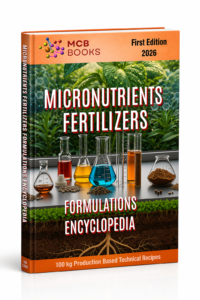
How to Make Micronutrient Fertilizers: Complete Formulation Encyclopedia
 Micronutrient fertilizers are a cornerstone of modern agricultural productivity, providing essential trace elements that plants require for healthy
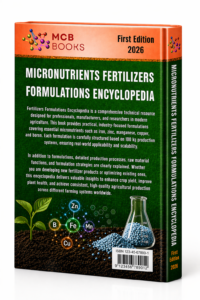 growth and high yields. Elements such as iron (Fe), zinc (Zn), manganese (Mn), copper (Cu), boron (B), and molybdenum (Mo) play critical roles in enzymatic activity, chlorophyll formation, and overall plant metabolism. Understanding how to make micronutrient fertilizers through reliable and industrially proven methods is essential for manufacturers, agronomists, and entrepreneurs aiming to enter or expand in the fertilizer market.
The process of producing micronutrient fertilizers begins with selecting the right raw materials and determining the appropriate formulation type. These fertilizers can be produced in various forms, including liquid solutions, water-soluble powders, suspension concentrates, and granules. Each type has its own advantages depending on the intended application method, such as foliar spray, fertigation, or soil application. A complete formulation encyclopedia provides a wide range of ready-to-use recipes that are designed for maximum efficiency, stability, and compatibility.
One of the most important aspects of micronutrient fertilizer production is ensuring proper solubility and stability. In liquid formulations, micronutrients must be fully dissolved and remain stable over time without precipitation. This often requires the use of stabilizers, pH regulators, and high-purity raw materials. For powder formulations, uniform particle size and moisture control are crucial to ensure easy dissolution in water and consistent application performance.
Chelation is another key technology used in the manufacturing process of micronutrient fertilizers. Chelated micronutrients, such as those based on EDTA, DTPA, or EDDHA, improve nutrient availability and uptake by plants, especially in challenging soil conditions like high pH or calcareous soils. The formulation encyclopedia explains how to incorporate chelating agents into fertilizer formulations, optimize ratios, and maintain stability during storage and application. This knowledge allows producers to create high-performance fertilizers that meet the demands of modern agriculture.
The manufacturing process itself typically involves controlled mixing, dissolution, and quality control steps. Raw materials are carefully weighed and added in a specific sequence to ensure proper interaction and stability. Mixing conditions, such as temperature and agitation speed, are optimized to achieve a homogeneous product. After production, quality control tests are performed to verify parameters such as pH, solubility, nutrient concentration, and physical appearance. Proper packaging and storage conditions are also essential to maintain product quality until it reaches the end user.
A comprehensive formulation encyclopedia not only provides detailed recipes but also offers practical guidance on scaling production from laboratory to industrial levels. This is particularly valuable for new businesses looking to establish themselves in the fertilizer industry. By using proven formulations, manufacturers can reduce development time, minimize risks, and quickly bring competitive products to market.
With the increasing global demand for efficient and sustainable fertilizers, micronutrient products represent a high-growth and high-profit segment. Farmers are becoming more aware of the importance of balanced nutrition, creating strong market opportunities for well-formulated micronutrient fertilizers. By mastering how to make these products and leveraging a complete formulation encyclopedia, producers can gain a significant competitive advantage.
In conclusion, the How to Make Micronutrient Fertilizers: Complete Formulation Encyclopedia serves as a practical and strategic resource for anyone involved in fertilizer production. It combines formulation knowledge, manufacturing techniques, and real-world application insights, making it an indispensable guide for achieving success in the agricultural sector.