Introduction
NPK fertilizers are among the most widely used fertilizers in modern agriculture because they supply the three primary nutrients required for plant growth: nitrogen (N), phosphorus (P), and potassium (K). These nutrients play a critical role in plant development, crop productivity, and soil fertility management.
NPK fertilizers can be produced in several forms including granular fertilizers and liquid fertilizers depending on the agricultural application and fertilizer production technology. The general manufacturing stages of fertilizer production are explained in the NPK Fertilizer Production Process guide, while the chemical components used in fertilizer manufacturing are discussed in Raw Materials Used in NPK Fertilizer Production.
Understanding how to make NPK fertilizer requires knowledge of fertilizer raw materials, nutrient ratios, and industrial fertilizer manufacturing technologies.
NPK fertilizer production is one of the most important industrial processes in modern fertilizer manufacturing.
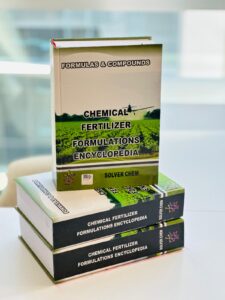
Detailed industrial fertilizer formulations and production technologies are explained in the Chemical Fertilizers Formulations Encyclopedia.
Raw Materials Used in NPK Fertilizer Production
The production of NPK fertilizers requires the use of chemical nutrient sources that supply nitrogen, phosphorus, and potassium to plants.
Common nitrogen sources include:
-
Urea
-
Ammonium nitrate
-
Ammonium sulfate
Common phosphorus sources include:
-
Phosphoric acid
-
Monoammonium phosphate (MAP)
-
Diammonium phosphate (DAP)
Common potassium sources include:
-
Potassium chloride (MOP)
-
Potassium sulfate (SOP)
-
Potassium nitrate
These raw materials are selected based on their nutrient concentration, solubility, and compatibility with other fertilizer components.
NPK Fertilizer Formulas
NPK fertilizers are produced in different nutrient ratios depending on crop requirements and soil conditions. These ratios are expressed as three numbers representing nitrogen, phosphorus, and potassium percentages.
Examples of common fertilizer formulations include:
-
NPK 20-20-20 – balanced fertilizer used in many agricultural applications
-
NPK 15-15-15 – commonly used for field crops
-
NPK 10-10-10 – general-purpose fertilizer
-
NPK 12-12-17 – potassium-rich fertilizer used for fruit crops
Fertilizer manufacturers design these formulas to provide balanced nutrition for specific agricultural needs.
Types of NPK Fertilizers
NPK fertilizers can be produced in several different forms depending on agricultural application methods and fertilizer manufacturing technologies.
The most common types of NPK fertilizers include:
Granular NPK fertilizers – widely used for field crops because they are easy to apply and store.
Liquid NPK fertilizers – commonly used in fertigation systems and modern irrigation technologies.
Water-soluble NPK fertilizers – designed for rapid nutrient absorption and greenhouse cultivation.
Each fertilizer type requires specific production technologies and formulation adjustments depending on nutrient concentration and crop requirements.
NPK Fertilizer Production Process
Industrial fertilizer manufacturing involves several important steps that ensure consistent nutrient composition and fertilizer quality.
Raw Material Preparation
The first stage involves selecting and preparing nitrogen, phosphorus, and potassium sources. These materials are stored in silos and measured using industrial weighing systems.
Mixing and Blending
The raw materials are mixed using industrial fertilizer mixers to achieve uniform nutrient distribution. Proper mixing is essential for producing consistent fertilizer formulations.
Granulation or Liquid Production
Depending on the fertilizer type, the mixture may undergo:
-
granulation for solid fertilizers
-
dissolution and mixing for liquid fertilizers
Granulation processes are explained in detail in the Granular NPK Fertilizer Production Process guide, while liquid fertilizer production technologies are described in the Liquid NPK Fertilizer Production Process guide.
Drying and Cooling
Granular fertilizers are dried to remove moisture and then cooled to improve their physical stability.
Screening and Packaging
The final fertilizer product is screened to achieve uniform particle size and then packaged for distribution and agricultural use.
Factors Affecting Fertilizer Production Quality
Several factors influence the quality and performance of NPK fertilizers. These include raw material purity, mixing efficiency, moisture control, and granulation conditions.
Proper control of these parameters ensures stable fertilizer formulations and efficient nutrient availability for crops.
Industrial Fertilizer Formulations Guide
Detailed fertilizer formulations, raw material combinations, and fertilizer production technologies are explained in the Chemical Fertilizers Formulations Encyclopedia. This professional guide provides comprehensive information about fertilizer formulation development and industrial fertilizer manufacturing processes.
SUMMARY
NPK fertilizers are produced by combining nitrogen, phosphorus, and potassium sources in specific nutrient ratios designed for agricultural applications. The manufacturing process involves raw material preparation, mixing, granulation or dissolution, drying, cooling, and packaging. Understanding these processes helps fertilizer manufacturers produce high-quality fertilizers that improve crop productivity and soil fertility.
Related Articles
• NPK Fertilizer Production Process
• Raw Materials Used in NPK Fertilizer Production
• NPK Fertilizer Production Equipment
• Granular NPK Fertilizer Production Process
• Liquid NPK Fertilizer Production Process