Introduction
NPK fertilizers are among the most widely used fertilizers in modern agriculture. These fertilizers supply the three primary nutrients required for plant growth: nitrogen (N), phosphorus (P), and potassium (K). The quality and performance of NPK fertilizers depend largely on the raw materials used during the manufacturing process. Understanding these raw materials is essential for fertilizer manufacturers, agronomists, and entrepreneurs interested in fertilizer production.
Industrial NPK fertilizer production involves combining different nutrient sources in precise ratios to obtain the desired formulation such as 20-20-20, 15-15-15, or 10-10-10. Each nutrient source contributes specific chemical properties that influence solubility, nutrient availability, and product stability.
The general industrial manufacturing steps are explained in detail in the NPK Fertilizer Production Process guide.
Primary Nutrient Sources in NPK Fertilizers
Nitrogen Sources
Nitrogen is the most important nutrient for vegetative plant growth. It promotes leaf development, chlorophyll formation, and overall plant vigor. Several nitrogen-containing compounds are commonly used in NPK fertilizer manufacturing.
Common nitrogen raw materials include:
-
Urea (CO(NH₂)₂)
One of the most widely used nitrogen fertilizers due to its high nitrogen content (46%). It dissolves easily and is suitable for many fertilizer blends. -
Ammonium Nitrate (NH₄NO₃)
Contains both ammonium and nitrate nitrogen forms, providing quick and sustained nutrient availability. -
Ammonium Sulfate ((NH₄)₂SO₄)
Provides nitrogen as well as sulfur, which is beneficial for many crops. -
Ammonium Chloride (NH₄Cl)
Sometimes used in specific fertilizer formulations depending on soil and crop requirements.
Phosphorus Sources
Phosphorus is essential for energy transfer within plants and plays a key role in root development, flowering, and seed formation.
Common phosphorus raw materials include:
-
Monoammonium Phosphate (MAP)
A highly concentrated phosphorus fertilizer that also supplies nitrogen. -
Diammonium Phosphate (DAP)
One of the most popular phosphorus fertilizers due to its high nutrient content. -
Single Superphosphate (SSP)
Contains phosphorus and calcium, commonly used in granular fertilizers. -
Triple Superphosphate (TSP)
A highly concentrated phosphorus source widely used in industrial fertilizer production.
These materials determine the phosphorus percentage in NPK fertilizer formulations.
Potassium Sources
Potassium is responsible for improving plant resistance, regulating water balance, and enhancing crop quality. It plays an important role in enzyme activation and plant metabolism.
Common potassium raw materials include:
-
Potassium Chloride (KCl)
Also known as muriate of potash, it is the most commonly used potassium fertilizer. -
Potassium Sulfate (K₂SO₄)
Used for chloride-sensitive crops and provides both potassium and sulfur. -
Potassium Nitrate (KNO₃)
Supplies both potassium and nitrogen, often used in high-quality fertilizer formulations.
Secondary Nutrients and Additives
In addition to primary nutrients, modern NPK fertilizers often contain secondary nutrients and additives to improve product performance.
Common secondary nutrients include:
-
Calcium compounds
-
Magnesium salts
-
Sulfur-containing compounds
Additives may include:
-
Anti-caking agents
-
Granulation binders
-
Stabilizers
-
Coating materials
These components improve fertilizer handling, storage stability, and application efficiency.
Industrial Raw Material Selection
The choice of raw materials in NPK fertilizer production depends on several factors:
-
Desired nutrient ratio
-
Solubility requirements
-
Production technology (granulation or blending)
-
Cost of raw materials
-
Crop and soil requirements
Industrial fertilizer manufacturers carefully select raw materials to produce fertilizers that meet both agronomic and commercial requirements.
Relation Between Raw Materials and Fertilizer Formulation
Each NPK fertilizer formulation is created by adjusting the proportions of nitrogen, phosphorus, and potassium sources.
For example:
-
NPK 20-20-20 requires balanced nutrient sources.
-
NPK 15-15-15 often uses a combination of urea, DAP, and potassium chloride.
-
NPK 10-10-10 may include superphosphate and other nutrient carriers.
Understanding raw material properties allows manufacturers to design efficient fertilizer blends for different agricultural applications.
Industrial Knowledge and Formulation Development
Designing efficient NPK fertilizer formulations requires knowledge of chemical compatibility, nutrient solubility, and production technologies. Industrial fertilizer manufacturers often rely on specialized formulation guides and production manuals to develop new fertilizer products.
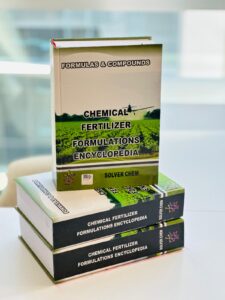
Detailed industrial fertilizer formulations and manufacturing methods can be found in the Chemical Fertilizers Formulations Encyclopedia, which provides comprehensive information on fertilizer production technologies.
Industrial Fertilizer Formulations Guide
Detailed industrial fertilizer formulations, raw material combinations and production methods can be found in the Chemical Fertilizers Formulations Encyclopedia. This professional guide explains practical fertilizer production techniques used in industrial manufacturing.
Factors Affecting Raw Material Selection in NPK Fertilizer Production
The selection of raw materials in NPK fertilizer production depends on several technical and economic factors. Manufacturers must consider nutrient concentration, chemical compatibility between components, solubility characteristics, and raw material cost.
For example, urea is widely used as a nitrogen source because of its high nitrogen content and good solubility. Diammonium phosphate is commonly selected for phosphorus supply due to its high nutrient concentration and compatibility with many fertilizer formulations.
Potassium chloride is often chosen as the primary potassium source because it is widely available and cost-effective. However, in chloride-sensitive crops, potassium sulfate may be preferred instead.
Careful selection of raw materials ensures stable fertilizer formulations, efficient nutrient delivery, and consistent product quality in industrial fertilizer production.
SUMMARY
NPK fertilizer production relies on a wide range of chemical raw materials that supply essential nutrients for plant growth. Nitrogen sources such as urea and ammonium nitrate, phosphorus sources such as MAP and DAP, and potassium sources such as potassium chloride form the foundation of most NPK fertilizer formulations. Secondary nutrients and additives further improve fertilizer performance and stability. Understanding these raw materials is fundamental for efficient fertilizer manufacturing and for designing formulations that meet agricultural needs.