Introduction
Granular NPK fertilizers are widely used in modern agriculture due to their ease of handling, uniform nutrient distribution, and improved storage stability. In industrial fertilizer manufacturing plants, granular fertilizers are produced through specialized granulation technologies that transform powdered raw materials into uniform granules.
The overall industrial manufacturing stages are explained in the NPK Fertilizer Production Process guide, while the chemical components used in fertilizer production are discussed in Raw Materials Used in NPK Fertilizer Production.
Granular fertilizer production is one of the most common methods used by fertilizer manufacturers around the world.
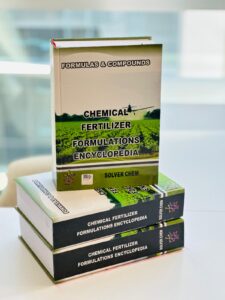
Detailed industrial fertilizer formulations and production technologies are explained in the Chemical Fertilizers Formulations Encyclopedia.
Raw Materials Used in Granular NPK Fertilizers
Granular NPK fertilizers are produced using nitrogen, phosphorus, and potassium sources. These nutrients are combined in specific proportions depending on the desired fertilizer formulation.
Common raw materials include:
-
Urea
-
Ammonium sulfate
-
Ammonium nitrate
-
Monoammonium phosphate (MAP)
-
Diammonium phosphate (DAP)
-
Potassium chloride (MOP)
-
Potassium sulfate (SOP)
These materials provide the essential nutrients required for plant growth and agricultural productivity.
Granulation Process in Fertilizer Manufacturing
Granulation is the process of forming small fertilizer granules from powdered raw materials. This process improves fertilizer handling, transportation, and field application.
The most common granulation methods used in fertilizer production include:
-
Rotary drum granulation
-
Disc granulation (pan granulator)
-
Fluidized bed granulation
These technologies allow fertilizer manufacturers to produce uniform granules with consistent nutrient composition.
Drying and Cooling Process
After granulation, fertilizer granules contain moisture that must be removed to ensure product stability.
Industrial fertilizer plants typically use:
-
Rotary dryers
-
Hot air drying systems
-
Rotary coolers
These systems help reduce moisture content and strengthen the physical structure of fertilizer granules.
Screening and Size Classification
Once the fertilizer granules are dried and cooled, they pass through screening equipment that separates particles according to size.
Screening equipment may include:
-
Vibrating screens
-
Rotary screens
-
Fertilizer classifiers
Oversized granules are crushed and recycled back into the granulation process, while undersized particles are returned to the system for reprocessing.
Industrial Fertilizer Formulations Guide
Detailed fertilizer formulations and production technologies can be found in the Chemical Fertilizers Formulations Encyclopedia, which provides comprehensive information about industrial fertilizer manufacturing and formulation development.
Factors Affecting Granulation Efficiency
The efficiency of fertilizer granulation depends on several factors including raw material moisture content, binder concentration, granulator speed, and particle size distribution. Optimizing these parameters helps manufacturers produce uniform fertilizer granules with consistent nutrient composition.
SUMMARY
Granular NPK fertilizers are produced through a series of industrial processes including raw material preparation, granulation, drying, cooling, screening, and packaging. These processes ensure that fertilizer granules have consistent nutrient composition, good physical stability, and efficient agricultural performance.