Introduction
Liquid detergent has become one of the most preferred cleaning products due to its ease of use, fast solubility, and effective stain removal performance. From household cleaning to commercial applications, it offers flexibility that powder detergents sometimes cannot provide.
Many beginners assume that making liquid detergent is complicated, but the basic production process is relatively simple when the right ingredients and formulation approach are used.
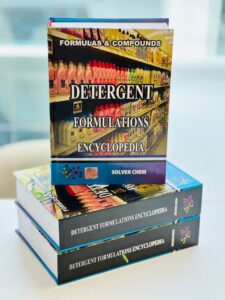
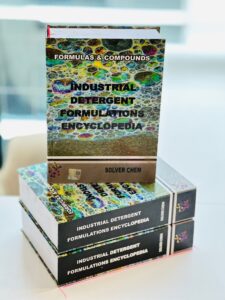
If you want to understand how real detergent formulations are designed for performance and stability, this resource provides practical, industry-based knowledge.
👉 DETERGENT FORMULATIONS ENCYCLOPEDIA
Main Ingredients in Liquid Detergent
Liquid detergents are formulated using a combination of different components:
- Surfactants (SLES, LABSA, nonionic surfactants)
- Builders and pH adjusters
- Thickening agents
- Preservatives
- Fragrances and colorants
Each ingredient must be balanced carefully to ensure stability and performance.
👉 For a deeper understanding of detergent formulations and production systems, you can also read:
https://makingchembooks.com/making-powder-detergent-and-methods/
Basic Liquid Detergent Production Process
The production of liquid detergent typically involves the following steps:
- Water preparation
- Addition of surfactants
- Neutralization (if required)
- Mixing of additives
- Thickening and adjustment
- Final homogenization
Compared to powder detergents, liquid systems require more attention to viscosity and stability.
Common Problems in Liquid Detergent Production
Some of the most frequent issues include:
- Low viscosity (too watery product)
- Phase separation
- Poor foaming performance
- Instability during storage
These problems are usually related to formulation imbalance rather than the production process.
Liquid vs Powder Detergent: Key Differences
While both serve similar purposes, there are important differences:
- Liquid detergents dissolve instantly
- Powder detergents often have stronger cleaning power for heavy soils
- Liquid systems require preservatives
- Powder systems are generally more stable
👉 You can explore powder detergent production in detail here:
https://makingchembooks.com/making-powder-detergent-and-methods/
Why Formulation Matters
One of the biggest mistakes beginners make is focusing only on the process.
In reality:
- Correct formulation ensures stability
- Ingredient compatibility determines product quality
- Small changes can significantly impact performance
Professional detergent products are always based on tested formulations.
SUMMARY
Liquid detergent production is relatively simple at a basic level, but producing a stable and high-performance product requires careful formulation and ingredient selection. While the process itself is straightforward, long-term success depends on using reliable formulations and understanding how different components interact. For anyone looking to scale production, starting with proven systems is the most effective approach.