Introduction
In many industrial cleaning applications, water-based detergents are not always enough. Heavy oils, sticky residues, and hydrocarbon-based contaminants often require a stronger approach. This is where solvent-based parts cleaners become essential.
These products are designed to dissolve contamination quickly and effectively, especially in situations where speed and precision matter. From maintenance workshops to manufacturing plants, solvent cleaners are widely used for cleaning metal components and sensitive parts.
If you want to understand how powder-based cleaning systems compare, you can also review the main guide here:
👉 Powder Parts Washer Detergent | Formulation, Ingredients and Production Process
Industrial Detergent Formulations Encyclopedia
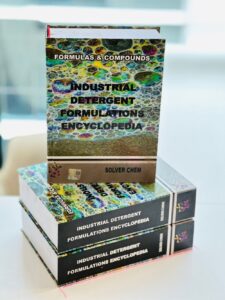
If you are developing industrial cleaning products, this encyclopedia provides detailed formulation systems based on real production experience, including both solvent-based and powder detergents.
🔥 WHY SOLVENT CLEANERS ARE STILL WIDELY USED
Despite the growth of water-based systems, solvent cleaners remain important in industrial cleaning.
They are preferred because:
- They dissolve heavy contamination quickly
- They work without requiring high temperatures
- They are effective on stubborn hydrocarbon residues
👉 In many cases, they are the only practical solution for certain cleaning tasks.
What Is a Solvent-Based Parts Cleaner?
A solvent parts cleaner is a chemical formulation designed to remove:
- Heavy oils and grease
- Tar and asphalt residues
- Adhesive contamination
- Industrial hydrocarbon deposits
Unlike alkaline detergents, these cleaners rely on solvent action, meaning they dissolve contaminants instead of breaking them down chemically.
Main Components of Solvent Parts Cleaners
The formulation of a solvent cleaner is relatively simple but must be carefully balanced.
Solvent Base
This is the core of the formulation.
Common types include:
- Aliphatic hydrocarbons
- Aromatic solvents (used in stronger systems)
- Oxygenated solvents
The choice of solvent determines cleaning strength and evaporation rate.
Emulsifiers
Some formulations include emulsifiers to improve rinsability.
- Allow mixing with water
- Reduce residue after cleaning
- Improve overall usability
Additives
Additional components may include:
- Corrosion inhibitors
- Fragrance
- Stabilizers
These improve performance and user experience.
Production Process of Solvent Parts Cleaners
The production process is straightforward but requires careful handling due to solvent properties.
Typical steps include:
- Charging the solvent base into a mixing tank
- Adding emulsifiers under controlled mixing
- Incorporating additives
- Mixing until a uniform solution is obtained
- Packaging under safe conditions
Because many solvents are flammable, proper safety systems and ventilation are essential.
Applications of Solvent Parts Cleaners
Solvent-based cleaners are used in a wide range of applications:
- Automotive repair and maintenance
- Machinery cleaning
- Metal surface preparation
- Removal of adhesive and tar residues
They are particularly useful when fast cleaning is required without heating.
Solvent vs Powder Parts Cleaners
Choosing between solvent and powder systems depends on the application.
- Solvent cleaners
- Fast action
- Ideal for localized cleaning
- Strong on heavy contamination
- Powder detergents
- Better for large-scale industrial washing
- More cost-effective
- Suitable for automated systems
Understanding this difference helps in selecting the right product.
Formulation Considerations
A good solvent cleaner should balance:
- Cleaning strength
- Evaporation rate
- Surface compatibility
- Safety
Poor formulation can result in:
- Surface damage
- Excessive evaporation
- Residue formation
Why Professional Formulations Matter
Even though solvent systems seem simple, small formulation differences can have a big impact.
Professionally developed formulations ensure:
- Consistent performance
- Safe application
- Better product stability
💰 SAVE TIME BY USING PROVEN FORMULATIONS
Developing a solvent cleaner from scratch can lead to:
- Wasted raw materials
- Inconsistent results
- Safety risks
👉 Instead, using tested formulations allows you to:
- Start production faster
- Reduce development costs
- Achieve reliable performance
The Industrial Detergent Formulations Encyclopedia provides ready-to-use formulations that are already optimized for industrial use.
Related Articles
-
Powder Parts Washer Detergent | Formulation, Ingredients and Production Process
-
Composition and Compound of Parts Washer Detergent Powder | Manufacturing
-
What Is Parts Cleaner? Types, Uses and Industrial Applications
SUMMARY
Solvent-based parts cleaners are essential for removing heavy hydrocarbon contamination that cannot be handled by water-based systems. Their fast action and strong dissolving power make them ideal for specific industrial cleaning tasks.
However, their performance depends heavily on proper formulation and raw material selection.
👉 This is why using tested and optimized formulations is critical.
With the right formulation system, manufacturers can produce reliable solvent cleaners while avoiding costly trial-and-error processes.