Introduction
Industrial cleaning processes require reliable and consistent performance, especially when dealing with heavy grease, oil, and stubborn contaminants on metal parts. Powder parts washer detergents are specifically developed for these applications and are widely used in automated washing systems.
What makes these detergents effective is not just their strength, but the way different chemical components work together. A well-balanced composition ensures strong cleaning performance while also protecting metal surfaces and maintaining stability during production and use.
If you want to understand the full system behind these products, you can also take a look at the main guide here:
👉 Powder Parts Washer Detergent | Formulation, Ingredients and Production Process
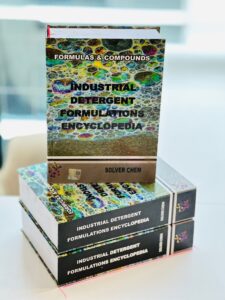
Industrial Detergent Formulations Encyclopedia
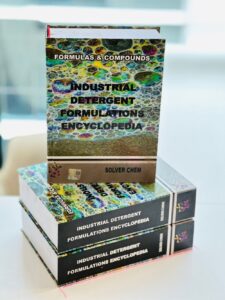
If you are planning to produce industrial cleaning powders, this encyclopedia gives you a practical understanding of formulation systems based on real manufacturing experience.
🔥 BUILD FORMULATIONS THAT ACTUALLY WORK
In practice, creating a detergent that works consistently is not as simple as combining a few raw materials.
Many formulations fail because:
- The balance between ingredients is wrong
- Some components are incompatible
- The product performs well in theory but not in real use
👉 This is why using proven formulation systems makes a big difference.
The Industrial Detergent Formulations Encyclopedia provides formulations that are already tested under real production conditions, helping you avoid unnecessary trial and error.
Main Components of Powder Parts Washer Detergents
A typical powder detergent formulation is built from several functional groups. Each one contributes to overall performance.
Alkaline Compounds
These are the main cleaning agents in the system.
Commonly used materials include:
- Sodium carbonate
- Sodium metasilicate
- Sodium hydroxide
They are responsible for breaking down grease and oil, which is essential in industrial cleaning.
Surfactants
Surfactants help lift and remove dirt from surfaces.
- Usually nonionic and low-foam types
- Suitable for machine-based cleaning systems
They ensure that contaminants are not just loosened, but actually removed from the surface.
Builders
Builders support the overall cleaning process.
They help:
- Improve the effectiveness of surfactants
- Stabilize the formulation
- Enhance cleaning performance
Chelating Agents
Water quality can significantly affect cleaning performance, especially in industrial systems.
To solve this, chelating agents such as:
- STPP
- EDTA
are used to control water hardness and maintain consistency.
Corrosion Inhibitors
Since these detergents are used on metal surfaces, protection is critical.
Corrosion inhibitors help prevent:
- Rust formation
- Surface damage
- Long-term deterioration
Additional Additives
Depending on the formulation, other components may be included:
- Anti-redeposition agents
- Foam control agents
- Stability enhancers
These improve usability and ensure consistent results.
Why Composition Matters
Even though the ingredient list may look simple, the real performance depends on how these components are balanced.
A slight change in ratio can affect:
- Cleaning efficiency
- Surface safety
- Product stability
This is why formulation design is not just about selecting materials, but about understanding how they interact.
Connection Between Composition and Production
The formulation structure directly affects how the product is manufactured.
During production, factors such as:
- Mixing quality
- Particle size
- Moisture levels
must be carefully controlled to ensure a stable and uniform product.
You can also explore the full production process here:
👉 Production and Formulation of Parts Washer Detergent Powder
Common Problems in Real Production
In real manufacturing environments, some common issues include:
- Poor ingredient compatibility
- Excessive alkalinity
- Uneven mixing
- Dust formation
These problems often lead to inconsistent product performance and customer complaints.
Why Experience Matters in Formulation
On paper, many formulations may look correct, but real performance depends on experience.
A good formulation should:
- Clean effectively
- Remain stable over time
- Work well in industrial equipment
- Be cost-efficient
Achieving all of these at the same time requires careful design and practical knowledge.
💰 AVOID COSTLY TRIAL AND ERROR
Trying to develop a working detergent formulation from scratch can be time-consuming and expensive.
Many manufacturers go through multiple failed attempts before achieving acceptable results.
👉 Using proven formulations allows you to:
- Save time
- Reduce raw material waste
- Improve product consistency
- Start production faster
The Industrial Detergent Formulations Encyclopedia provides ready-to-use systems that are already optimized for industrial use.
Related Articles
-
Powder Parts Washer Detergent | Formulation, Ingredients and Production Process
-
What Is Parts Cleaner? Types, Uses and Industrial Applications
-
Parts Cleaner Solvent | Production Process, Formulation and Applications
SUMMARY
The effectiveness of powder parts washer detergents depends largely on their composition. A balanced combination of alkaline compounds, surfactants, builders, and additives is essential for achieving strong cleaning performance while protecting metal surfaces.
In practice, even small formulation mistakes can lead to poor results, instability, or increased production costs.
👉 For this reason, working with tested and well-designed formulations is the most efficient approach.
Using proven systems not only improves product quality but also allows manufacturers to produce reliable cleaning solutions with confidence.