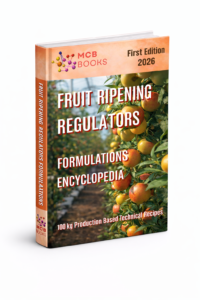
In modern agriculture and post-harvest technology, controlling fruit ripening is no longer optional—it is essential. Producers, exporters, and agricultural manufacturers rely heavily on scientifically designed formulations to ensure fruits reach the market with perfect color, texture, taste, and shelf life. This is where a comprehensive resource like the Fruit Ripening Regulators Formulations Encyclopedia becomes extremely valuable.
This encyclopedia is not just a theoretical reference. It is a practical, industry-focused guide that provides detailed formulation knowledge, production techniques, and real-world applications of fruit ripening regulators. Whether you are a manufacturer, agricultural engineer, researcher, or entrepreneur, this resource offers everything needed to understand and develop high-performance ripening solutions.
UNDERSTANDING THE CORE OF RIPENING TECHNOLOGY
One of the first things you will learn inside the encyclopedia is the scientific foundation of fruit ripening. It explains how plant hormones—especially ethylene—control the entire ripening process. From chlorophyll breakdown to sugar development and fruit softening, every stage is covered in a clear and practical way.
The encyclopedia also distinguishes between climacteric and non-climacteric fruits, helping readers understand why certain fruits respond differently to ripening treatments. This knowledge is essential when designing formulations for crops like bananas, mangoes, tomatoes, apples, and citrus fruits.
DETAILED FORMULATION KNOWLEDGE
The most valuable part of the encyclopedia is its extensive collection of real industrial formulations. These are not generic recipes—they are carefully designed, practical, and commercially relevant formulations.
You will learn:
- How to formulate ethylene-releasing solutions
- Ethephon-based liquid formulations for different crops
- Controlled-release ripening systems
- Water-soluble and high-stability formulations
- Advanced nano-based and encapsulated systems
Each formulation is structured to provide a clear understanding of raw materials, functional roles, and performance characteristics. This allows users to replicate, modify, or scale formulations for industrial use.
RAW MATERIALS AND INGREDIENT SELECTION
Another critical area covered in the encyclopedia is raw material selection. Choosing the right ingredients is essential for formulation stability, effectiveness, and safety.
Inside, you will find detailed explanations of:
- Active ingredients such as ethephon and ethylene precursors
- Solvents and their impact on formulation performance
- Stabilizers used to prevent degradation
- Surfactants and adjuvants for better absorption
- Advanced carriers for controlled-release systems
Understanding these components helps manufacturers design formulations that are both efficient and commercially viable.
PRODUCTION AND MANUFACTURING TECHNIQUES
The encyclopedia provides step-by-step insights into industrial production processes. This is especially valuable for manufacturers and entrepreneurs who want to produce ripening regulators at scale.
Key topics include:
- Mixing and homogenization techniques
- pH control for formulation stability
- Filtration and purification methods
- Quality control parameters
- Packaging and storage considerations
These sections are written in a practical manner, making it easy to translate knowledge into real production environments.
APPLICATION METHODS AND FIELD USAGE
Knowing how to produce a formulation is only part of the process. The encyclopedia also explains how to apply these formulations effectively in agricultural settings.
You will learn about:
- Spray applications for field crops
- Dipping methods for post-harvest treatment
- Ethylene gas application in ripening chambers
- Use of sachets and controlled-release systems in packaging
These application techniques are essential for achieving uniform ripening and minimizing product loss.
PROBLEM SOLVING AND OPTIMIZATION
One of the standout features of the encyclopedia is its focus on real-world challenges. It does not only provide formulations—it also helps you solve problems commonly faced in the industry.
Topics include:
- Causes of uneven ripening and how to fix it
- Over-ripening and shelf-life issues
- Stability problems in liquid formulations
- Phytotoxicity risks and how to prevent them
This practical approach makes the encyclopedia a valuable troubleshooting guide.
COMMERCIAL AND BUSINESS INSIGHTS
Beyond technical knowledge, the encyclopedia also offers insights into the commercial side of fruit ripening regulators.
You will gain understanding of:
- Market demand for ripening chemicals
- Cost considerations in formulation production
- Profitability of ripening regulator manufacturing
- Export requirements and quality standards
This makes it an excellent resource not only for chemists but also for business owners and investors.
FUTURE TRENDS AND INNOVATIONS
The encyclopedia also explores the future of fruit ripening technologies. As agriculture becomes more advanced and sustainable, new solutions are emerging.
Key innovations covered include:
- Nano-technology in ripening formulations
- Biodegradable and eco-friendly regulators
- Smart packaging systems
- AI-controlled ripening environments
These insights help readers stay ahead of industry trends and develop next-generation products.
WHO SHOULD USE THIS ENCYCLOPEDIA?
This encyclopedia is designed for a wide range of users, including:
- Chemical manufacturers
- Agricultural engineers
- Agronomists and consultants
- Export companies
- Researchers and students
- Entrepreneurs entering the agrochemical sector
Its practical and detailed structure makes it suitable for both beginners and experienced professionals.
SUMMARY
The Fruit Ripening Regulators Formulations Encyclopedia is a comprehensive, practical, and industry-focused resource that covers every aspect of fruit ripening technology. From fundamental science to advanced formulations, from production processes to commercial strategies, it provides all the knowledge needed to succeed in this field.
By using this encyclopedia, readers can develop high-quality formulations, optimize agricultural processes, and gain a competitive advantage in the global market. As demand for better fruit quality and longer shelf life continues to grow, this resource becomes an essential tool for anyone involved in modern agriculture and agrochemical production.