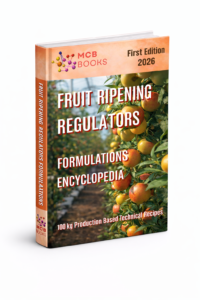
Fruit ripening regulator formulations are essential tools in modern agriculture, enabling producers to control the timing, uniformity, and quality of fruit maturation. From the selection of raw materials to the final packaged product, each stage of formulation development plays a critical role in ensuring performance, stability, and safety.
The process begins with the careful selection of raw materials. The most important component is the active ingredient, typically a compound that either releases ethylene or mimics its action. Ethephon is one of the most widely used active substances because it decomposes within plant tissues to release ethylene, the natural hormone responsible for ripening. In addition to the active ingredient, formulators must select appropriate solvents, stabilizers, and adjuvants. Water is commonly used as the primary solvent, while buffering agents are added to maintain pH stability and prevent premature degradation of the active compound. Surfactants and wetting agents are also included to improve the penetration and uniform distribution of the formulation on fruit surfaces.
Once the raw materials are selected, the formulation process moves into the production stage. This begins with preparing the base solution, where solvents and stabilizers are mixed under controlled conditions. The active ingredient is then gradually incorporated into the mixture, ensuring that temperature and pH are carefully monitored. This step is critical because many ripening agents, especially ethephon, are sensitive to environmental conditions and can degrade if not handled properly.
After the active ingredient is added, the mixture undergoes homogenization. High-shear mixing equipment is often used to achieve a uniform and stable formulation. This ensures that every part of the solution contains the same concentration of active components, which is essential for consistent performance during application. Following homogenization, the formulation is filtered to remove any impurities or undissolved particles, resulting in a clear and stable product.
Quality control is a vital part of the production process. Samples of the formulation are tested for parameters such as pH, active ingredient concentration, stability, and performance. Stability testing is particularly important, as the formulation must remain effective over its intended shelf life under various storage conditions. Any deviations are corrected before the product proceeds to the next stage.
Packaging is the final step in the formulation process. The product is filled into suitable containers that protect it from light, air, and contamination. Proper labeling is also essential, providing information on usage instructions, safety precautions, and storage conditions. The choice of packaging material can influence the stability of the formulation, so it must be selected carefully.
From raw materials to the final product, the development of fruit ripening regulator formulations requires a combination of chemical knowledge, process control, and quality assurance. Each component and step must be optimized to ensure that the formulation performs effectively in real agricultural conditions.
In conclusion, fruit ripening regulator formulations are the result of a highly controlled and precise manufacturing process. By understanding how raw materials are transformed into a final product, manufacturers and agricultural professionals can produce reliable and efficient solutions that meet the demands of modern agriculture.