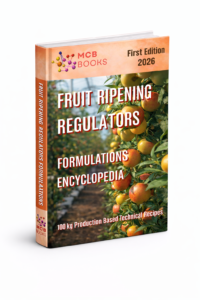
Water soluble fruit ripening formulations are widely used in modern agriculture due to their ease of application, fast action, and compatibility with large-scale farming systems. These formulations are designed to dissolve completely in water, allowing uniform distribution of the active ingredient across fruit surfaces. When properly developed and applied, they provide highly efficient and consistent ripening results, making them essential in both pre-harvest and post-harvest operations.
The key to achieving maximum efficiency in water soluble formulations lies in the selection and balance of ingredients. The primary active ingredient is typically a compound that releases or mimics ethylene, such as ethephon. This compound must be fully soluble and stable in aqueous systems to ensure consistent performance. Any undissolved particles or instability in the solution can lead to uneven ripening and reduced effectiveness.
Water acts as the main carrier in these formulations, but its quality is often overlooked. The presence of minerals, hardness, or impurities in water can affect solubility and stability. Therefore, using clean, low-hardness water or adding conditioning agents is important to maintain formulation performance. In industrial settings, deionized or treated water is often preferred for preparing high-quality solutions.
Stability is another critical factor. Ethephon and similar compounds are sensitive to pH, particularly alkaline conditions that can cause premature decomposition. To prevent this, buffering agents are added to maintain the formulation within an acidic pH range. This ensures that the active ingredient remains stable during storage and only releases ethylene when applied to the fruit. Proper pH control not only improves shelf life but also enhances the predictability of the ripening process.
Adjuvants play a significant role in maximizing efficiency. Surfactants reduce surface tension, allowing the solution to spread evenly across fruit surfaces. This improves coverage and ensures that the active ingredient is absorbed uniformly. Wetting agents and dispersants further enhance distribution, especially when large volumes are applied in field or post-harvest treatments. Without these additives, even a well-prepared solution may fail to deliver consistent results.
The preparation process of water soluble formulations must be carefully controlled. The active ingredient should be added gradually to the water while mixing continuously to avoid clumping or localized concentration differences. Proper mixing ensures a homogeneous solution, which is essential for uniform application. In large-scale operations, mechanical agitators are often used to maintain consistency throughout the process.
Application methods also influence efficiency. Water soluble formulations can be applied as sprays, dips, or through irrigation systems depending on the crop and production stage. Spray applications are common in orchards and greenhouses, providing direct contact with fruit surfaces. Dipping methods are widely used in post-harvest handling to ensure complete coverage. In all cases, correct dosage and timing are crucial to achieving optimal results.
Environmental conditions must also be considered. Temperature, humidity, and airflow can affect how the formulation behaves after application. For example, high temperatures may accelerate the release of ethylene, while low humidity can reduce absorption efficiency. Adjusting application strategies based on environmental factors helps maximize the effectiveness of the formulation.
Another important aspect is storage and handling. Even well-formulated products can lose efficiency if stored improperly. Containers should be kept in cool, shaded environments and sealed tightly to prevent contamination or degradation. In some cases, stabilizers and antioxidants are included in the formulation to further protect the active ingredient.
In conclusion, achieving maximum efficiency in water soluble fruit ripening formulations requires a combination of proper ingredient selection, careful formulation design, and precise application practices. From maintaining pH stability to ensuring uniform distribution and considering environmental conditions, every factor contributes to the overall performance of the product. When optimized, these formulations provide reliable, cost-effective, and scalable solutions for controlling fruit ripening in modern agricultural systems.