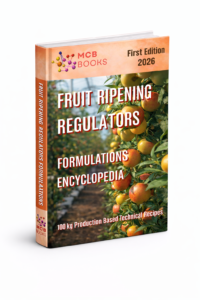
Controlled release fruit ripening formulations represent a major advancement in agricultural chemistry and post-harvest technology. Unlike conventional ripening agents that act quickly and sometimes unpredictably, controlled release systems are designed to deliver active ingredients gradually over time. This allows for better control of the ripening process, improved fruit quality, and reduced losses during storage and transportation.
At the center of these formulations is the concept of regulated ethylene delivery. Ethylene is the key plant hormone responsible for triggering ripening in climacteric fruits such as bananas, mangoes, apples, and tomatoes. Traditional methods, such as direct ethylene gas exposure or fast-acting chemical sprays, can sometimes lead to uneven ripening or overexposure. Controlled release formulations solve this problem by ensuring that ethylene or ethylene-generating compounds are released at a consistent and predictable rate.
One of the most common approaches used in controlled release systems is encapsulation. In this technique, the active ingredient—such as ethephon or an ethylene precursor—is enclosed within a protective material. These materials can include polymers, biodegradable carriers, or lipid-based matrices. The encapsulation layer acts as a barrier, controlling how quickly the active ingredient is released into the environment or absorbed by the fruit. Factors such as temperature, humidity, and pH can influence the release rate, allowing for highly adaptable systems.
Polymer-based delivery systems are widely used in industrial applications. These systems can be engineered to degrade slowly, releasing the active compound over a defined period. This is particularly useful in long-distance transportation, where fruits need to ripen gradually during shipment. Biodegradable polymers are especially attractive because they minimize environmental impact while maintaining high performance.
Another advanced technology is microencapsulation, where extremely small particles containing the active ingredient are dispersed within a formulation. These microcapsules can be applied as sprays or coatings, providing uniform coverage and controlled release at the fruit surface. This approach enhances efficiency and reduces the total amount of chemical required, making it both cost-effective and environmentally friendly.
Sachet-based systems are also widely used in controlled release applications. These are small packets containing ethylene-generating compounds that are placed inside packaging or storage environments. The sachets release ethylene slowly, ensuring consistent ripening without the need for complex equipment. This method is particularly popular in retail and export packaging.
The manufacturing of controlled release formulations requires precise engineering and process control. It typically involves preparing the active ingredient, selecting appropriate encapsulation materials, and using specialized equipment to create uniform particles or matrices. Techniques such as spray drying, coacervation, and polymer blending are commonly used. Quality control is critical to ensure that the release profile meets the desired specifications.
The benefits of controlled release fruit ripening formulations are significant. They provide uniform ripening across batches, reduce the risk of over-ripening, and extend shelf life by preventing sudden changes in fruit physiology. These systems also improve supply chain management by allowing producers to better synchronize ripening with market demand.
In addition, controlled release technologies contribute to sustainability. By reducing the amount of active ingredient required and minimizing waste, they support more environmentally responsible agricultural practices. The use of biodegradable materials further enhances their eco-friendly profile.
Despite their advantages, these formulations require careful design and application. Factors such as storage conditions, packaging, and environmental variables must be considered to achieve optimal performance. Proper handling and adherence to recommended guidelines are essential to ensure consistent results.
In conclusion, controlled release fruit ripening formulations are a powerful innovation that combines advanced materials science with agricultural chemistry. By enabling precise control over the ripening process, these technologies help improve fruit quality, reduce losses, and meet the demands of modern supply chains. As research and development continue, controlled release systems are expected to play an increasingly important role in the future of agriculture.