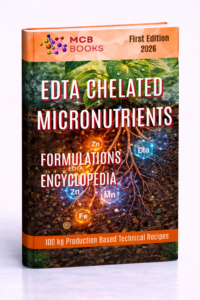
 Industrial Production of Micronutrient Fertilizers: Complete Guide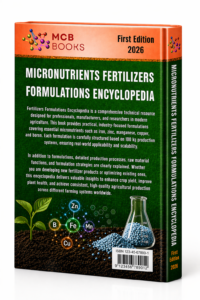
Micronutrient fertilizers are a vital component of modern agricultural systems, supplying essential trace elements that plants require for optimal growth, yield, and quality. Although needed in small quantities, micronutrients such as iron (Fe), zinc (Zn), manganese (Mn), copper (Cu), boron (B), and molybdenum (Mo) play critical roles in plant metabolism, enzyme activation, and nutrient balance. The Industrial Production of Micronutrient Fertilizers: Complete Guide provides a comprehensive overview of how these fertilizers are formulated and manufactured on a large scale using efficient and reliable industrial processes.
The industrial production of micronutrient fertilizers begins with selecting high-quality raw materials. These typically include micronutrient salts such as sulfates, chlorides, and nitrates, as well as chelating agents and stabilizers. The choice of raw materials is crucial, as it directly affects the solubility, stability, and effectiveness of the final product. Manufacturers must also consider the intended application method, whether for foliar spraying, fertigation, or soil application, when designing formulations.
Micronutrient fertilizers are produced in several forms, including liquid solutions, water-soluble powders, suspension concentrates, and granules. Liquid formulations are widely used due to their ease of application and rapid absorption by plants. In industrial production, liquid fertilizers are prepared by dissolving raw materials in water under controlled conditions. Maintaining the correct pH and mixing order is essential to prevent precipitation and ensure long-term stability. Filtration and homogenization processes are often used to achieve a clear and uniform product.
Powder and water-soluble micronutrient fertilizers require different production techniques. These formulations are created through precise blending of dry ingredients, ensuring uniform particle size and consistent nutrient distribution. Moisture control is critical to prevent caking and ensure easy dissolution in water. Granular formulations are produced using advanced methods such as granulation and drying, which improve handling properties and allow for controlled nutrient release in soil applications.
Chelation technology is a key factor in the industrial production of micronutrient fertilizers. Chelated micronutrients, such as EDTA, DTPA, and EDDHA complexes, enhance nutrient availability by protecting micronutrient ions from chemical reactions in the soil. This is particularly important in alkaline conditions where micronutrients can become unavailable to plants. By incorporating chelating agents into formulations, manufacturers can produce fertilizers that deliver higher efficiency and better crop performance.
The manufacturing process involves several critical steps, including raw material weighing, controlled mixing, dissolution or granulation, quality control, and packaging. Each stage must be carefully monitored to ensure consistent product quality and compliance with industry standards. Quality control tests such as pH measurement, solubility analysis, and nutrient content verification are essential to guarantee that the fertilizer performs as expected.
Efficiency and scalability are also important considerations in industrial production. By optimizing production processes and using advanced equipment, manufacturers can reduce costs, minimize waste, and increase productivity. This is especially important in a competitive global market where cost efficiency and product quality are key factors for success.
With the growing demand for sustainable agriculture and high-efficiency fertilizers, micronutrient products are becoming increasingly important. Farmers are seeking solutions that improve crop performance while maintaining soil health. By utilizing advanced industrial production methods, manufacturers can meet these demands and develop innovative products that stand out in the market.
In conclusion, the Industrial Production of Micronutrient Fertilizers: Complete Guide provides a detailed and practical framework for producing high-quality fertilizers on a commercial scale. It combines formulation knowledge with industrial production techniques, enabling manufacturers to achieve consistent quality and long-term success in the agricultural industry.