How to Make Herbicides | Formulation and Production Process
Herbicides are essential chemical products used in modern agriculture to control unwanted weeds and improve crop productivity. As the demand for efficient weed control solutions continues to grow worldwide, understanding how to make herbicides and develop effective formulations has become increasingly important for manufacturers and agricultural professionals. Herbicide production is not simply about mixing chemicals; it requires a deep understanding of formulation science, ingredient compatibility, and industrial processing techniques.
Herbicides are generally composed of active ingredients that directly affect plant growth, along with several supporting components that enhance their performance. These supporting ingredients include solvents, surfactants, stabilizers, and adjuvants. The active ingredient is responsible for destroying or inhibiting weed growth, while surfactants improve spreading and absorption on plant surfaces. Stabilizers ensure the product remains effective over time, and solvents help dissolve or carry the active compounds efficiently.
The herbicide production process begins with the selection of the appropriate active ingredient based on the target weed species and the intended application method. Once the active ingredient is selected, the formulation type must be determined. Common herbicide formulations include emulsifiable concentrates (EC), suspension concentrates (SC), soluble liquids (SL), wettable powders (WP), and water-dispersible granules (WG). Each formulation type offers specific advantages depending on factors such as solubility, stability, and ease of application.
After determining the formulation type, the raw materials are carefully measured and mixed under controlled conditions. This stage is critical, as improper mixing can lead to unstable products or reduced effectiveness. The mixture is then homogenized to ensure that all components are evenly distributed. Following this, stability testing is conducted to evaluate the product’s shelf life, performance consistency, and resistance to environmental conditions such as temperature changes and pH variations. Finally, the finished herbicide is packaged according to industry standards and prepared for distribution.
Modern herbicide production also focuses on improving efficiency, reducing environmental impact, and enhancing product stability. Advanced formulation techniques allow manufacturers to create herbicides that are more effective at lower doses while maintaining safety for crops and the environment. For professionals looking to develop high-quality products, gaining access to detailed formulation knowledge is crucial.
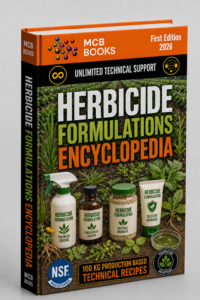
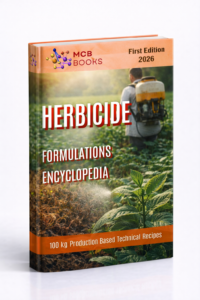
For those interested in professional formulations and industrial production techniques, the Herbicide Formulations Encyclopedia provides comprehensive guidance on real-world herbicide formulations, raw materials, and manufacturing processes used in the industry.
In conclusion, herbicide production is a complex but highly valuable process that combines chemistry, engineering, and agricultural science. By understanding the formulation components and production steps, manufacturers can develop efficient, stable, and high-performance herbicides that meet the needs of modern agriculture.