Herbicide Formulation Guide | Industrial Production Techniques
Herbicide formulation is a critical aspect of modern agrochemical production, directly influencing the effectiveness, stability, and application efficiency of weed control products. As global agriculture continues to evolve, the demand for high-performance herbicides has increased significantly, making it essential for manufacturers to understand industrial production techniques and formulation principles. A well-designed herbicide formulation not only improves weed control efficiency but also ensures safety for crops, users, and the environment.
Herbicide formulations are developed by combining active ingredients with various formulation components that enhance performance and usability. The active ingredient is responsible for controlling or eliminating weeds, while other components such as solvents, surfactants, emulsifiers, stabilizers, and dispersing agents ensure the product is stable, easy to apply, and effective under different environmental conditions. Each component must be carefully selected to ensure compatibility and long-term stability.
Industrial herbicide production begins with selecting the appropriate formulation type based on the physicochemical properties of the active ingredient and the intended application method. Common formulation types include emulsifiable concentrates (EC), suspension concentrates (SC), soluble liquids (SL), wettable powders (WP), and water-dispersible granules (WG). Each formulation has specific advantages; for example, EC formulations provide excellent penetration, while SC formulations offer improved safety and reduced solvent use.
The production process typically involves several key stages, including raw material selection, pre-mixing, dispersion, homogenization, and quality control testing. During mixing, precise control of temperature, pH, and agitation speed is required to achieve a uniform and stable product. Homogenization ensures that all particles or droplets are evenly distributed, preventing separation during storage. Quality control tests are then conducted to evaluate parameters such as stability, viscosity, particle size, and performance under field conditions.
Modern industrial techniques also focus on optimizing formulation efficiency while minimizing environmental impact. Advances in formulation science have led to the development of safer, more biodegradable, and highly effective herbicides. Manufacturers now aim to reduce solvent usage, improve active ingredient delivery, and enhance compatibility with other agricultural inputs.
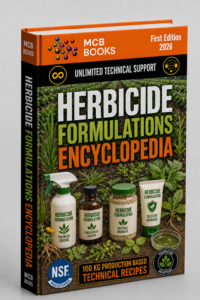
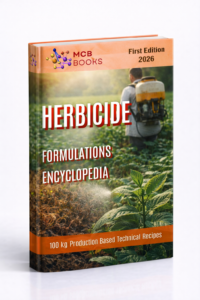
For professionals and manufacturers seeking advanced knowledge, the Herbicide Formulations Encyclopedia offers detailed insights into real industrial formulations, raw material selection, and proven production techniques used in the agrochemical industry.
In conclusion, herbicide formulation is a complex yet essential process that combines chemistry, engineering, and agricultural science. By mastering industrial production techniques and formulation strategies, manufacturers can develop high-quality herbicides that meet the growing demands of modern agriculture while ensuring efficiency, safety, and sustainability.