How to Make Colored Foam for Touchless Car Wash Systems (Step-by-Step)
Colored foam is one of the most attractive and effective solutions used in modern touchless car wash systems. It combines strong cleaning performance with visual appeal, creating a premium experience for customers while maintaining high efficiency. To produce a stable and high-performance colored foam, it is essential to follow a structured formulation and production process.
 The first step in making colored foam is selecting the right surfactant system. Anionic surfactants such as Sodium Lauryl Ether Sulfate (SLES)
 are commonly used as the primary foaming agents due to their ability to generate dense and rich foam. To enhance grease removal and improve overall cleaning efficiency, nonionic surfactants are added to the formulation. This combination ensures effective removal of dirt, oil, and road contaminants without mechanical contact.
The second step involves incorporating foam boosters. Ingredients like Cocamide DEA or Cocamidopropyl Betaine play a critical role in increasing foam stability and thickness. These components help the foam adhere to vertical vehicle surfaces, allowing longer dwell time and better cleaning performance. A stable foam structure is essential in touchless systems, where chemical action replaces physical scrubbing.
Next, builders and alkalinity regulators are introduced. Substances such as sodium carbonate help improve cleaning power by breaking down stubborn dirt and grease. At this stage, chelating agents like EDTA are also added to bind metal ions present in hard water. This prevents interference with surfactant performance and ensures consistent results across different water qualities.
The fourth step is adding the coloring system. Water-soluble dyes are carefully selected to ensure compatibility with the formulation’s pH and chemical structure. The color should remain stable during storage and should not stain vehicle surfaces. Typically, vibrant colors such as pink, blue, or green are used to enhance visual impact and differentiate products in the market.
After all raw materials are selected, the production process begins. Deionized water is used as the base, and ingredients are added sequentially under controlled mixing conditions. Surfactants are dissolved first, followed by foam boosters, builders, chelating agents, and finally dyes. Proper mixing speed and temperature control are important to prevent instability or phase separation.
Once the formulation is complete, quality control tests are conducted. These include foam density, foam stability, cleaning efficiency, and compatibility with car surfaces. Adjustments may be made to optimize performance depending on the intended application.
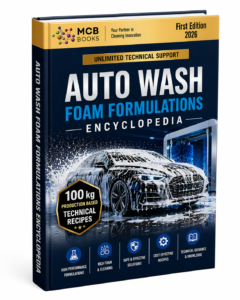
For manufacturers aiming to produce professional-grade products, detailed industrial formulations and production insights can be found in the Touchless Car Wash Colored Foam Formulations Encyclopedia. This type of resource helps ensure consistent quality, scalability, and market-ready performance.