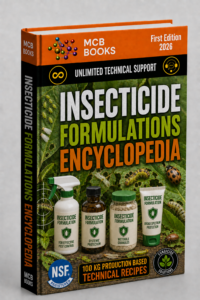
How to Make Insecticide Formulations | Complete Industrial Guide
Insecticide formulations play a critical role in modern agriculture, public health, and industrial pest control. While active ingredients are responsible for killing or controlling insects, the formulation determines how effectively the product performs in real-world conditions. Understanding how to make insecticide formulations is essential for manufacturers, chemical engineers, and entrepreneurs aiming to enter the agrochemical industry.
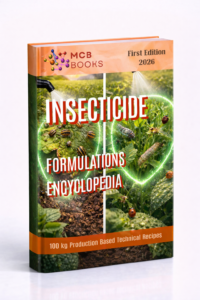
At its core, an insecticide formulation is a carefully balanced mixture of active ingredients, solvents, surfactants, stabilizers, and other additives. The goal is to create a stable, effective, and easy-to-apply product. Industrial production requires not only chemical knowledge but also precise control of mixing, particle size, pH, and storage stability.
The first step in developing an insecticide formulation is selecting the appropriate active ingredient. This depends on the target pest, application method, and regulatory requirements. Common insecticide types include pyrethroids, organophosphates, carbamates, and neonicotinoids. Each active ingredient has unique solubility, stability, and toxicity characteristics, which directly influence the formulation type.
Once the active ingredient is selected, the next step is choosing the formulation type. The most common industrial insecticide formulations include Emulsifiable Concentrates (EC), Suspension Concentrates (SC), Wettable Powders (WP), and Soluble Liquids (SL). For example, EC formulations require oil-soluble active ingredients and emulsifiers, while SC formulations involve dispersing solid particles in water using dispersants and stabilizers.
The formulation process typically begins with dissolving or dispersing the active ingredient into a suitable medium. In EC formulations, the active ingredient is dissolved in organic solvents along with emulsifiers to ensure proper mixing with water during application. In SC formulations, the active ingredient is milled into fine particles and suspended in water with the help of dispersing agents and thickeners.
Mixing is a crucial stage in insecticide production. Industrial mixers, high-shear homogenizers, and milling equipment are used to achieve uniform distribution and consistent particle size. Proper mixing ensures that the product remains stable over time and delivers consistent performance in the field.
Another important factor in insecticide formulation is stability. Products must remain effective under varying storage conditions, including temperature fluctuations and long shelf life. Stabilizers, antioxidants, and preservatives are often added to prevent degradation and microbial growth. pH adjustment is also critical, as many active ingredients are sensitive to acidic or alkaline environments.
Quality control is an essential part of industrial insecticide manufacturing. Each batch must be tested for parameters such as active ingredient concentration, viscosity, pH, emulsion stability, and particle size distribution. Ensuring consistent quality not only improves product performance but also helps meet international regulatory standards.
Finally, packaging and storage are key considerations. Insecticide formulations must be stored in compatible containers that prevent leakage, contamination, and degradation. Proper labeling and compliance with safety regulations are also mandatory for market distribution.
In conclusion, making insecticide formulations is a complex process that combines chemistry, engineering, and quality control. By selecting the right ingredients, optimizing formulation techniques, and maintaining strict production standards, manufacturers can produce high-performance insecticide products suitable for global markets.