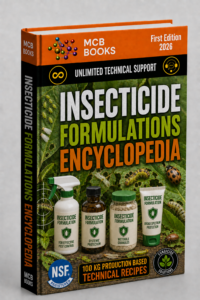
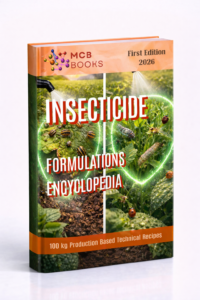
Insecticide Formulations and Production Process Explained Step by Step
Insecticide formulations are essential products in modern agriculture, public health, and professional pest control applications. Although the active ingredient is the core component that affects or kills insects, the overall success of the product depends heavily on the formulation system. A well-designed insecticide formulation improves stability, enhances application performance, ensures safe handling, and helps the active ingredient reach the target pest more effectively. For this reason, understanding insecticide formulations and production processes step by step is very important for manufacturers, chemical engineers, and businesses involved in agrochemical production.
The first step in insecticide production is selecting the active ingredient. This decision depends on the target insect, intended use area, local regulations, and the physical and chemical properties of the raw material. Some active ingredients are more suitable for liquid systems, while others perform better in solid or suspended formulations. Solubility, pH tolerance, thermal stability, and compatibility with additives must all be considered before moving to the next stage.
The second step is determining the most suitable formulation type. Common insecticide formulation types include Emulsifiable Concentrates (EC), Suspension Concentrates (SC), Wettable Powders (WP), Soluble Liquids (SL), and granules. Each system has different production needs and performance characteristics. For example, EC formulations are designed for oil-soluble active ingredients and require solvents and emulsifiers, while SC formulations contain finely milled solid active materials dispersed in water with the help of stabilizers and dispersing agents.
The third step is raw material selection. Besides the active ingredient, a formulation may contain solvents, surfactants, dispersants, wetting agents, antifoams, stabilizers, preservatives, and viscosity modifiers. These ingredients are not added randomly. Each one has a technical purpose, such as improving solubility, preventing sedimentation, increasing spreading ability, or extending shelf life. Choosing high-quality and compatible raw materials is essential for a stable and marketable product.
The fourth step is premixing. In this stage, the main ingredients are combined in a controlled order to prepare the system for final processing. In liquid insecticide formulations, the active ingredient may first be dissolved in solvent or blended into water with the support of suitable additives. In solid or suspension-based products, careful dispersion is required to avoid lump formation and uneven particle distribution.
The fifth step is homogenization or milling. This is one of the most critical parts of the production process. In SC and WP formulations especially, particle size has a direct effect on product stability and field performance. Industrial equipment such as bead mills, colloid mills, or high-shear mixers is often used to achieve a uniform and fine particle size. Better particle control generally leads to improved suspension quality and more consistent insect control results.
The sixth step is adjustment and stabilization. Once the main mixture is formed, the formulation is checked and corrected for pH, viscosity, density, foaming tendency, and storage behavior. Stabilizers and preservatives may be added at this point to improve long-term performance. A formulation must remain stable not only during production but also during transport, storage, and end use.
The seventh step is quality control. Every industrial insecticide product should be tested before packaging. Standard checks usually include active ingredient content, pH, emulsion behavior, suspension stability, particle size distribution, viscosity, and appearance. This stage ensures product consistency and supports compliance with commercial and regulatory requirements.
The final step is packaging and storage. Insecticide products must be packed in suitable containers that protect the formulation from moisture, heat, light, and contamination. Correct labeling, handling instructions, and safe storage conditions are also critical parts of the production chain.
In summary, insecticide formulations are much more than simple chemical mixtures. They are carefully engineered systems designed for effectiveness, stability, and ease of use. A step-by-step production approach helps manufacturers create reliable products that meet both technical and market demands.