Industrial Insecticide Manufacturing Process | Formulas and Methods
Industrial insecticide manufacturing is a highly structured process that combines chemical formulation knowledge with precise production techniques. These products are widely used in agriculture, public health, and pest control industries, and their effectiveness depends not only on the active ingredient but also on how the formulation is designed and produced. Understanding the formulas and methods behind industrial insecticide production is essential for creating stable, efficient, and market-ready products.
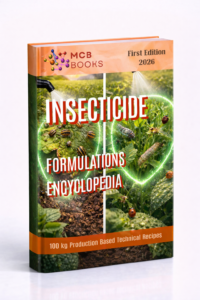
The process begins with selecting the appropriate active ingredient based on the target pest and application method. Active ingredients such as pyrethroids, organophosphates, and neonicotinoids each have unique physical and chemical properties. These characteristics determine whether the formulation will be liquid, solid, or suspension-based. Solubility, stability, and compatibility with other ingredients must be carefully evaluated at this stage.
Once the active ingredient is chosen, the formulation type is defined. Common industrial insecticide formulations include Emulsifiable Concentrates (EC), Suspension Concentrates (SC), Wettable Powders (WP), and Soluble Liquids (SL). Each formulation type requires a different approach. For example, EC formulations involve dissolving the active ingredient in organic solvents and adding emulsifiers, while SC formulations require fine particle dispersion in water using dispersants and stabilizers.
The formulation stage involves combining the active ingredient with functional additives such as surfactants, solvents, dispersing agents, wetting agents, and stabilizers. These components are selected to improve product performance, enhance spreading ability, prevent phase separation, and ensure long-term storage stability. Proper formulation design ensures that the insecticide remains effective under various environmental conditions.
In industrial production, mixing and homogenization are critical steps. High-shear mixers, agitators, and milling equipment are used to achieve a uniform and consistent product. In suspension-based systems, particle size reduction is especially important, as smaller and uniform particles improve stability and application efficiency. Poor mixing can lead to sedimentation, phase separation, or inconsistent performance in the field.
Process control is another key aspect of insecticide manufacturing. Parameters such as temperature, pH, viscosity, and mixing speed must be monitored closely throughout production. Adjustments are often made during processing to optimize the formulation and maintain product quality. Stabilizers and preservatives may also be added to protect the formulation from degradation and microbial growth.
Quality control ensures that each batch meets industrial standards. Tests typically include active ingredient concentration, emulsion or suspension stability, pH level, viscosity, and appearance. These checks help maintain consistency and ensure compliance with international regulations.
Finally, the product is packaged in suitable containers that protect it from environmental factors such as light, heat, and moisture. Proper labeling and storage conditions are essential for safe handling and effective use.
In conclusion, industrial insecticide manufacturing is a combination of precise formulation design and controlled production methods. By selecting the right formulas and applying effective processing techniques, manufacturers can produce high-quality insecticides that deliver reliable performance in real-world applications.