INTRODUCTION
Foam engine degreasers are widely used in automotive and industrial cleaning applications due to their ability to cling to surfaces and provide extended contact time. This allows the cleaning agents to penetrate grease, oil, and dirt more effectively compared to standard liquid degreasers.
Unlike traditional liquid cleaners that quickly run off, foam-based formulations remain on vertical and uneven surfaces, improving cleaning efficiency and reducing product waste. This makes them especially suitable for engine bays, machinery parts, and hard-to-reach areas.
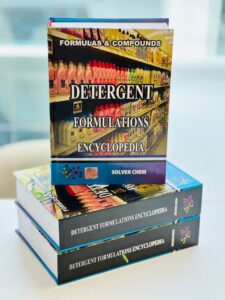
For professional and commercial formulations used in industrial cleaning products, you can explore the Detergent Formulations Encyclopedia:
https://makingchembooks.com/product/detergent-formulations-encyclopedia/

Discover advanced degreaser formulations inside the Detergent Formulations Encyclopedia, developed by a chemical engineer with over 40 years of experience.
For heavy-duty oil and grease removal, solvent-based systems are often preferred. You can explore a complete formulation guide here:
Solvent-Based Engine Degreaser Formula | Ingredients and Production Process
https://makingchembooks.com/how-to-make-a-solvent-based-engine-degreaser-formula-ingredients-and-production-process/
WHAT IS A FOAM ENGINE DEGREASER?
A foam engine degreaser is a cleaning formulation that produces a dense, stable foam designed to adhere to surfaces. The foam structure allows cleaning agents to remain in contact with contaminants for a longer period, improving the breakdown of grease and oil.
Foam itself does not clean directly, but it acts as a carrier that increases dwell time, allowing surfactants and active ingredients to work more effectively on stubborn dirt and oil residues.
These products are commonly packaged as spray foams or aerosol systems and are widely used in both professional and DIY cleaning applications.
FOAM ENGINE DEGREASER FORMULA OVERVIEW
A typical foam engine degreaser formulation consists of water or solvent base, surfactants, foam boosters, and performance additives.
Surfactants are responsible for breaking down grease and oil, while foam boosters create a thick and stable foam structure. This foam allows the formulation to stay on the surface longer, improving cleaning efficiency.
In water-based systems, surfactants emulsify oil and allow it to be rinsed away. In solvent-based systems, hydrocarbons dissolve grease directly, offering stronger cleaning performance.
Additional components such as corrosion inhibitors and stabilizers improve product performance and protect surfaces.
KEY PROPERTIES OF FOAM ENGINE DEGREASERS
1. Foam-Clinging Action
The foam adheres to vertical and irregular surfaces, increasing contact time and improving cleaning efficiency.
2. Extended Contact Time
Foam allows the cleaning solution to remain on the surface longer, helping break down stubborn grease and oil.
3. Controlled Application
Foam ensures even distribution and reduces product waste during application.
4. Improved Cleaning Efficiency
By increasing dwell time, foam enhances the performance of surfactants and cleaning agents.
RAW MATERIALS USED IN FOAM DEGREASERS
Foam degreasers are formulated using a combination of carefully selected ingredients.
Water or solvent acts as the base. Surfactants are used to remove grease and oil, while foam boosters stabilize the foam structure.
Additional ingredients such as corrosion inhibitors protect metal surfaces, and stabilizers improve product consistency and shelf life.
The formulation balance determines whether the product is mild, medium, or heavy-duty.
PRODUCTION PROCESS
The production of foam engine degreasers follows a controlled mixing process.
First, the base (water or solvent) is added to the mixing tank. Surfactants are then introduced gradually under agitation to ensure proper dispersion.
Foam boosters and additives are added to create the desired foam structure and performance characteristics. Corrosion inhibitors and stabilizers are incorporated to enhance product stability.
The mixture is stirred until homogeneous and then filtered before packaging into spray bottles or aerosol systems.
ADVANTAGES OF FOAM ENGINE DEGREASERS
Foam degreasers offer several advantages over traditional liquid cleaners.
They provide better surface coverage, especially on vertical surfaces, and allow longer contact time for improved cleaning results. Foam cleaning systems are widely used because they effectively remove grease, oil, and contaminants while being easier to control during application.
They also reduce product waste and improve cleaning efficiency in difficult areas.
LIMITATIONS
Despite their advantages, foam degreasers are not always the best option for every situation.
Foam itself does not provide cleaning power, so the effectiveness depends on the formulation. For extremely heavy grease and carbon deposits, stronger solvent-based degreasers may be required.
In some cases, excessive foam may also reduce cleaning efficiency if not properly formulated.
APPLICATION AREAS
Foam engine degreasers are used in various applications.
They are commonly used in automotive workshops, industrial cleaning facilities, maintenance operations, and equipment cleaning.
They are particularly effective for vertical surfaces, complex machinery, and areas where liquid cleaners would run off quickly.
SUMMARY
Foam engine degreaser formulations are designed to improve cleaning performance by increasing contact time and surface coverage.
By combining surfactants, foam boosters, and performance additives, these formulations provide effective grease removal while offering controlled and efficient application.
For heavy-duty cleaning applications, solvent-based degreasers remain an essential alternative, making both systems important in modern cleaning chemistry.
RELATED ARTICLES
Solvent-Based Engine Degreaser Formula | Ingredients and Production Process
https://makingchembooks.com/how-to-make-a-solvent-based-engine-degreaser-formula-ingredients-and-production-process/
Water-Based Engine Degreaser Formula | Ingredients and Production Process
https://makingchembooks.com/how-water-based-engine-degreasers-are-made-ingredients-raw-materials-and-manufacturing-process/
Degreaser Ingredients | Degreaser Recipe | Formulas
https://makingchembooks.com/degreaser-ingredients-degreaser-recipe-formulas/