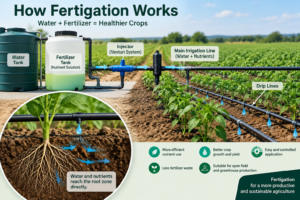
What is fertigation? Simply put, it is a way of giving fertilizer to plants through the irrigation system. Instead of applying water and fertilizer separately, both are supplied together, which makes feeding the crop easier and more controlled.
This method is especially common in drip irrigation systems and greenhouse production. It allows growers to apply nutrients when the plants need them and can also help reduce unnecessary fertilizer use. For this reason, fertigation is widely used in modern agriculture where water and nutrient management need to be more precise.
What Are the Main Advantages of Fertigation?
The main advantage of fertigation is control. Water and nutrients can be applied together, which makes it easier to feed crops at the right stage of growth. This can be especially useful in drip irrigation systems, where fertilizer is delivered close to the root zone.
Fertigation can also help reduce unnecessary fertilizer losses because nutrients are applied in smaller, more controlled amounts. In many cases, this means better use of both water and fertilizer.
Another benefit is flexibility. Growers can adjust the nutrient program during the season instead of relying on one large fertilizer application at the beginning.
Fertigation Techniques
There are several ways to apply fertilizer through an irrigation system. The method used usually depends on the size of the farm, the irrigation setup and the type of fertilizer being applied.
Common systems include venturi injectors, fertilizer tanks and dosing pumps. In drip irrigation, these systems introduce the fertilizer solution into the water line before it reaches the crop.
The important point is that the fertilizer should dissolve well and move evenly through the irrigation system.
Advantages and Disadvantages of Fertigation
Fertigation offers several clear benefits, but it also needs proper management.
Some of the main advantages include:
- better control over nutrient application
- more efficient fertilizer use
- easier adjustment during the growing season
- reduced labor compared with separate fertilizer applications
- good compatibility with drip irrigation and greenhouse systems
At the same time, fertigation requires suitable equipment and regular monitoring. Poorly dissolved fertilizers, incorrect dosing or blocked irrigation lines can cause problems. For this reason, both the fertilizer and the irrigation system need to be managed carefully.
Fertigation Fertilizers
Not every fertilizer is equally suitable for fertigation. Products used in irrigation systems should generally dissolve well in water and should not create deposits that may block emitters or pipes.
Water-soluble fertilizers are commonly preferred because they can be introduced into the irrigation system more easily. The exact fertilizer program depends on crop type, growth stage, water quality and the nutrient needs of the plants.
Looking for more fertilizer and agricultural formulation resources? Explore our specialized manufacturing book categories covering organic fertilizers, chemical fertilizers, plant growth regulators, and chemical & bio pesticides.