BEST PLANT YIELD ENHANCER INGREDIENTS FOR COMMERCIAL
AGRICULTURE PRODUCTS
 In commercial agriculture, achieving consistent and high crop yields depends heavily on the quality of input products used throughout the growing cycle. Among these, plant yield enhancers have become essential tools for improving productivity, crop quality, and resistance to environmental stress. The effectiveness of these products is directly linked to the selection of the right ingredients and how they are combined into a balanced formulation.
One of the most important ingredient groups in yield enhancer formulations is amino acids. These organic compounds play a critical role in plant metabolism, helping to improve nutrient transport, protein synthesis, and recovery from stress conditions such as drought, heat, and salinity. Amino acid-based formulations are particularly valuable in foliar applications, where rapid absorption leads to visible improvements in plant health and growth.
Micronutrients are another key component of high-performance plant yield enhancers. Elements such as zinc, boron, iron, and manganese are required in small quantities but have a significant impact on plant development. Zinc supports enzyme activity and growth regulation, boron is essential for flowering and fruit setting, and iron contributes to chlorophyll formation and photosynthesis. When properly chelated, these nutrients become more available to plants, increasing their effectiveness in both soil and foliar applications.
Plant growth regulators (PGRs) are widely used in commercial formulations to control and optimize plant growth processes. These include auxins, gibberellins, and cytokinins, which regulate cell division, elongation, and differentiation. By balancing these hormones, manufacturers can develop products that improve flowering, enhance fruit set, and increase overall yield potential.
Bio-stimulants such as seaweed extracts, humic acid, and fulvic acid also play a crucial role in modern yield enhancer systems. Seaweed extracts contain natural hormones and trace elements that stimulate plant growth and improve stress tolerance. Humic and fulvic acids enhance soil structure, increase nutrient availability, and promote root development, making them indispensable for both soil-applied and foliar products.
In addition to active ingredients, formulation additives like surfactants, chelating agents, and stabilizers are essential for ensuring product performance. Surfactants improve spreading and absorption on plant surfaces, chelating agents keep micronutrients soluble, and stabilizers maintain product integrity during storage and transport. Without these supporting components, even the best active ingredients may not deliver optimal results.
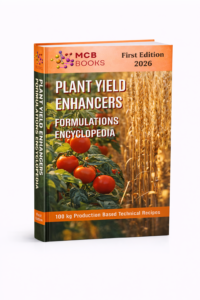
For agricultural manufacturers, the challenge lies in selecting the right combination of these ingredients and integrating them into stable, effective, and scalable formulations. Access to professional formulation systems can significantly accelerate this process. Resources such as the Plant Yield Enhancers Formulations Encyclopedia provide detailed ingredient selection strategies, ready-to-use formulations, and industrial production insights, helping businesses develop competitive products with confidence.
As global agriculture continues to evolve, demand for high-performance plant yield enhancers will only increase. By focusing on scientifically proven ingredients and optimized formulations, manufacturers can create products that deliver measurable improvements in crop productivity and long-term agricultural success.