FRUIT RIPENING REGULATOR FORMULATIONS:
COMPLETE MANUFACTURING PROCESS FOR COMMERCIAL USE
Fruit ripening regulator formulations have become an essential component of modern agricultural systems, particularly in post-harvest management and global fruit distribution. These formulations are designed to control and standardize the ripening process, ensuring consistent quality, improved shelf life, and reduced product losses. For commercial manufacturers and agribusiness investors, understanding the complete manufacturing process of fruit ripening regulators is a key step toward developing competitive and high-demand agricultural products.
The effectiveness of fruit ripening regulators is primarily based on ethylene, a natural plant hormone that triggers the ripening process. Industrial formulations are typically developed using ethylene-releasing compounds such as ethephon, which is widely recognized for its stability and controlled release properties. When applied to fruits, ethephon decomposes and releases ethylene, accelerating and synchronizing ripening in crops such as bananas, mangoes, tomatoes, and avocados. This controlled process allows producers to manage supply chains more efficiently and meet market demand with precision.
From a formulation perspective, a successful fruit ripening regulator requires a balanced combination of active ingredients, stabilizers, buffering agents, and surfactants. Stabilizers are critical to prevent premature decomposition, while buffering agents help maintain the optimal pH range for product stability. Surfactants improve surface coverage and penetration, ensuring that the active ingredient performs effectively. In liquid formulations, water acts as the primary carrier, and compatibility between all components is essential to maintain long-term storage stability.
The manufacturing process begins with the precise dosing of raw materials, followed by controlled mixing under regulated temperature and pH conditions. The active ingredient is gradually introduced into the aqueous phase, and auxiliary components are added sequentially to ensure uniform dispersion. Continuous agitation is maintained throughout the process to achieve a homogeneous mixture. Industrial production also includes filtration, quality control testing, and stability evaluation to ensure that the final product meets commercial standards and regulatory requirements.
In commercial applications, fruit ripening regulators are used through spraying, dipping, or controlled atmosphere exposure depending on the crop and logistical needs. Proper formulation design directly impacts the efficiency, safety, and profitability of these applications. Manufacturers must also consider packaging, labeling, and compliance with agricultural regulations in target markets.
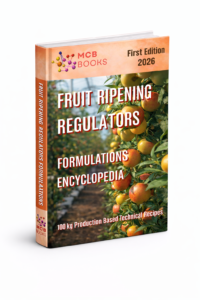
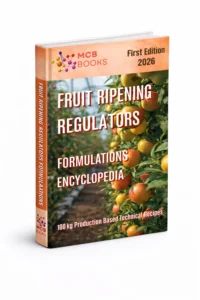
For those aiming to develop professional-grade products, having access to proven formulation systems is a major advantage. The Fruit Ripening Regulators Formulations Encyclopedia offers ready-to-use, 100 kg production-based formulations, including detailed raw material specifications and step-by-step production processes. This enables manufacturers to accelerate product development and confidently scale their operations in the agricultural chemicals market.