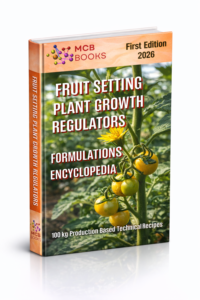
Fruit set enhancement is a critical objective in modern agriculture, as it directly determines crop yield, fruit quality, and overall economic return. While many plants naturally produce flowers in abundance, only a portion of these flowers successfully develop into fruits. This limitation is often caused by environmental stress, poor pollination, nutrient deficiencies, or hormonal imbalances within the plant. To address these challenges, agricultural systems increasingly rely on plant growth regulators (PGRs) and scientifically designed formulations that enhance fruit setting, improve fruit retention, and stabilize production under varying conditions.
Fruit set refers to the transition from a flower to a developing fruit, a process that typically requires successful pollination and fertilization. However, in many crops, this natural process is inefficient due to external factors such as high temperatures, low humidity, water stress, or inadequate insect activity. As a result, flowers may drop prematurely or fail to develop into fruits, leading to significant yield losses. Fruit set enhancement strategies focus on overcoming these limitations by applying hormones and specialized formulations that stimulate and regulate plant physiological processes.
Plant hormones play a central role in fruit set enhancement. Among the most important are auxins, gibberellins, cytokinins, and ethylene. These hormones work individually and synergistically to control various stages of fruit development. Auxins, such as indole-3-acetic acid (IAA) and naphthalene acetic acid (NAA), are essential for initiating fruit formation. They promote cell elongation and are directly involved in the development of the ovary into fruit. One of the most valuable properties of auxins is their ability to induce parthenocarpy, allowing fruits to develop without fertilization. This is particularly beneficial in conditions where pollination is limited or inconsistent.
Gibberellins, especially gibberellic acid (GA3), are responsible for stimulating cell division and elongation, contributing to fruit growth and size. They are often used in combination with auxins to enhance fruit development and improve uniformity. In many commercial crops, gibberellins are applied to increase fruit size and improve marketability. Cytokinins, on the other hand, promote cell division and delay the aging process of plant tissues. They help maintain active growth in developing fruits and improve nutrient distribution within the plant. This results in better fruit quality, increased weight, and improved shelf life.
Ethylene, although primarily known for its role in fruit ripening, also contributes to fruit set regulation. Ethephon, a widely used ethylene-releasing compound, is commonly included in agricultural formulations to control plant physiological responses. In certain crops, ethylene helps synchronize fruit development and improves overall crop uniformity. The combined use of these hormones in carefully balanced formulations allows for precise control over fruit set and development.
The success of fruit set enhancement depends not only on the choice of hormones but also on how they are formulated. Industrial formulations are designed to deliver active ingredients in a stable, effective, and easily applicable form. These formulations typically include solvents, surfactants, stabilizers, and adjuvants in addition to the active hormone compounds. Solvents, such as water or alcohol, are used to dissolve or disperse the active ingredients. Surfactants improve the spreading and penetration of the formulation on plant surfaces, ensuring efficient absorption. Stabilizers protect sensitive hormones from degradation caused by environmental factors such as light, temperature, and pH fluctuations. Adjuvants enhance the overall performance of the formulation by improving adhesion and uptake.
Different types of formulations are used in fruit set enhancement, depending on the specific requirements of the crop and application method. Liquid formulations are the most widely used due to their ease of application and rapid absorption. These are typically applied as foliar sprays, allowing direct interaction with plant tissues. Suspension concentrates offer improved stability and controlled release, making them suitable for long-term use and consistent performance. Water-soluble powders provide high concentrations of active ingredients and are convenient for storage and transportation. Advanced controlled-release formulations represent a more recent development, delivering hormones gradually over time and reducing the need for repeated applications.
The production of fruit set enhancement formulations involves a series of carefully controlled steps to ensure consistency and effectiveness. The process usually begins with the preparation of the solvent phase, followed by the dissolution or dispersion of active ingredients. Surfactants and stabilizers are then added under controlled mixing conditions to achieve uniform distribution. Homogenization is carried out to create a stable and consistent mixture, and pH adjustment is performed to optimize the stability of hormone compounds. The formulation is then filtered to remove impurities and packaged in suitable containers to maintain its quality during storage and transport. Each step in the production process must be carefully managed to prevent degradation of sensitive active ingredients and ensure reliable performance in the field.
Application methods play a crucial role in the effectiveness of fruit set enhancement strategies. Foliar spraying is the most common method, as it allows direct absorption of active ingredients through plant leaves. The timing of application is critical, with treatments typically applied during pre-flowering or early flowering stages to maximize effectiveness. Proper dosage is equally important, as excessive application can lead to abnormal growth, reduced yield, or hormonal imbalance. Understanding the specific needs of each crop and adjusting application practices accordingly is essential for achieving optimal results.
The benefits of fruit set enhancement through plant growth regulators are substantial. These include increased fruit set percentage, improved fruit size and uniformity, reduced fruit drop, and enhanced resistance to environmental stress. In addition, the use of well-designed formulations can lead to more consistent yields and higher quality produce, which are essential for meeting market demands and achieving profitability. These advantages have made fruit set enhancement a key component of modern agricultural practices, particularly in high-value crops such as citrus, grapes, apples, tomatoes, and berries.
Despite the many benefits, challenges can arise if formulations are not properly designed or applied. Poor fruit set may occur if the hormone concentration is insufficient or if the application timing is incorrect. Excessive fruit drop can result from hormonal imbalance, while uneven fruit development may be caused by inadequate formulation design. These issues highlight the importance of using scientifically developed formulations and following recommended application practices. Advanced solutions often involve multi-hormone formulations that combine auxins, gibberellins, and cytokinins to achieve balanced and effective results.
Recent advancements in formulation technology have introduced new opportunities for improving fruit set enhancement. Nano-formulations offer improved penetration and efficiency by reducing particle size and increasing surface area. Microencapsulation techniques allow for controlled release of active ingredients, providing long-lasting effects and reducing the frequency of application. Controlled-release systems are particularly beneficial in large-scale agriculture, where efficiency and cost-effectiveness are critical. The integration of biostimulants such as amino acids and seaweed extracts into hormone formulations is also gaining popularity, as it enhances plant health and overall performance.
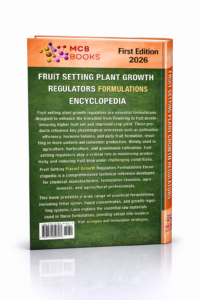
In the context of modern agriculture, the importance of professional and industrial-level formulations cannot be overstated. Poorly formulated products may degrade quickly, lose effectiveness, or cause damage to crops. In contrast, high-quality formulations ensure stability, efficiency, and safety, providing reliable results under a wide range of conditions. Access to detailed formulation knowledge is therefore essential for manufacturers, agronomists, and agricultural professionals. Comprehensive resources such as the Fruit Setting Plant Growth Regulators Formulations Encyclopedia provide valuable insights into formulation techniques, raw materials, and production methods, supporting the development of effective and innovative solutions.
In conclusion, fruit set enhancement is a vital aspect of agricultural production that can be significantly improved through the use of plant growth regulators and advanced formulations. By understanding the roles of different hormones, selecting appropriate formulations, and applying them correctly, it is possible to overcome environmental limitations and achieve higher yields with better quality. As agricultural practices continue to evolve, the integration of advanced technologies and professional knowledge will play an increasingly important role in ensuring sustainable and efficient crop production.