Gibberellins are one of the most important groups of plant growth regulators (PGRs), playing a vital role in regulating plant development and improving agricultural productivity. Among various plant hormones, gibberellins are particularly known for their ability to stimulate stem elongation, enhance seed germination, promote flowering, and increase fruit size.
With the rise of modern agriculture and the demand for higher yields and better crop quality, gibberellin-based formulations have become indispensable tools for farmers, agronomists, and agrochemical manufacturers. Understanding the types, functions, and commercial applications of gibberellins is essential for both practical agricultural use and industrial production.
WHAT ARE GIBBERELLINS?
Gibberellins are naturally occurring plant hormones found in almost all plant species. More than 100 different gibberellins have been identified, but only a few are biologically active and commercially relevant.
The most widely used form is Gibberellic Acid (GA3), which is known for its strong physiological effects and consistent performance in agricultural applications.
Key Characteristics
- Promote cell elongation and division
- Regulate enzyme production
- Influence flowering and fruit development
- Active at very low concentrations
TYPES OF GIBBERELLIN PLANT GROWTH REGULATORS
Gibberellins exist in multiple forms, but only certain types are used in agriculture and industry.
1. Gibberellic Acid (GA3)
- Most common and commercially available
- Used in fruit production, seed germination, and yield improvement
2. GA4 + GA7
- Often used in combination
- Particularly effective in fruit crops like apples and pears
- Improves fruit shape and size
3. Other Gibberellins (GA1, GA5, etc.)
- Naturally occurring in plants
- Less commonly used commercially
- Studied for specific physiological roles
Each type has unique properties and applications depending on crop requirements.
FUNCTIONS OF GIBBERELLINS IN PLANTS
Gibberellins regulate several critical physiological processes that directly affect plant growth and productivity.
1. Stem Elongation
Gibberellins stimulate cell elongation, resulting in taller plants and improved canopy structure.
2. Seed Germination
They break seed dormancy by activating enzymes that convert stored nutrients into usable energy.
3. Flowering Regulation
Certain plants require gibberellins to initiate flowering, especially under suboptimal environmental conditions.
4. Fruit Development
Gibberellins increase fruit size, improve shape, and enhance overall quality.
5. Enzyme Activation
They promote the production of enzymes such as amylase, which plays a key role in germination.
COMMERCIAL APPLICATIONS OF GIBBERELLINS
Gibberellin-based products are widely used across different agricultural sectors.
1. Fruit Production
- Increase fruit size (grapes, apples, citrus)
- Improve uniformity and market quality
- Enhance shelf life
2. Vegetable Cultivation
- Promote faster growth
- Improve yield and crop uniformity
3. Seed Industry
- Improve germination rates
- Ensure uniform seedling development
4. Malting Industry
- Used in barley processing
- Enhances enzyme production for brewing
5. Ornamental Plants
- Promote flowering
- Improve plant aesthetics
INDUSTRIAL FORMULATIONS OF GIBBERELLINS
To maximize effectiveness, gibberellins are formulated into various product types.
Common Formulation Types
- Soluble Powders (SP) – Easy to dissolve and apply
- Liquid Concentrates (SL) – Fast absorption and convenience
- Suspension Concentrates (SC) – High stability
- Granules (GR) – Controlled release applications
Each formulation is designed to meet specific agricultural needs and application methods.
KEY BENEFITS OF GIBBERELLIN-BASED PRODUCTS
Agronomic Benefits
- Improved plant growth and development
- Enhanced fruit size and quality
- Faster and more uniform germination
Economic Benefits
- Higher crop yields
- Better market value
- Increased profitability
Operational Advantages
- Easy application
- Effective at low doses
- Compatible with other agrochemicals
CHALLENGES IN GIBBERELLIN APPLICATION
Despite their advantages, gibberellins present some challenges:
- Sensitivity to light and pH
- Risk of over-application leading to excessive growth
- Stability issues in formulations
These challenges can be addressed through proper formulation techniques and correct application practices.
ADVANCED GIBBERELLIN TECHNOLOGIES
Modern agricultural technologies are enhancing the performance of gibberellin products.
Nano Formulations
- Improved absorption and efficiency
Controlled Release Systems
- Extended activity
- Reduced application frequency
Combination Products
- Gibberellins combined with auxins or cytokinins
- Synergistic growth effects
APPLICATION METHODS
Gibberellins can be applied using different methods depending on the crop:
- Foliar Spray – Most common method
- Seed Treatment – Improves germination
- Soil Application – Long-term growth effects
Correct timing and dosage are critical for optimal results.
INDUSTRIAL AND MARKET IMPORTANCE
The global demand for gibberellin-based plant growth regulators is increasing due to:
- Rising food demand
- Need for higher productivity
- Adoption of modern farming techniques
Gibberellins are now a key component of high-efficiency agricultural systems.
PROFESSIONAL FORMULATION KNOWLEDGE
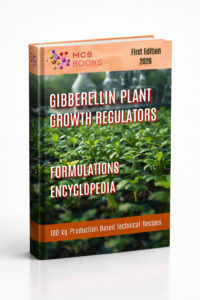
For those interested in industrial production and advanced formulations, the Gibberellin Plant Growth Regulators Formulations Encyclopedia provides:
- Detailed formulation techniques
- Industrial production methods
- Raw material selection strategies
- Commercial product insights
This type of resource is essential for professionals aiming to succeed in the agrochemical industry.
SUMMARY
Gibberellin plant growth regulators are powerful tools that significantly influence plant development and agricultural productivity. From seed germination to fruit development, their applications are diverse and highly valuable.
Understanding the different types of gibberellins, their functions, and their commercial uses is essential for both agricultural professionals and manufacturers. With advancements in formulation technologies, gibberellins are becoming more efficient, stable, and widely applicable.
As agriculture continues to evolve, gibberellin-based products will remain at the forefront of innovation and productivity enhancement.