Introduction
Looking for a glass cleaner formula that actually works in real production?
Most online guides explain basic mixtures, but they fail to deliver industrial-level performance. A professional glass cleaner must remove grease instantly, dry fast, and leave zero streaks or residue.
In commercial manufacturing, the difference between a standard product and a high-performing one comes down to formulation balance. The correct ratio of solvents, surfactants, and additives determines whether your product looks premium or average on the shelf.
If you are targeting automotive, household, or industrial cleaning markets, using a properly designed formulation is essential.
👉 For fully developed, production-ready cleaning formulations, you can also review the Detergent Formulations Encyclopedia:
https://makingchembooks.com/product/detergent-formulations-encyclopedia/
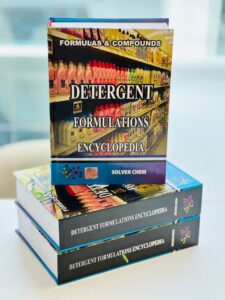
All formulations are developed by a chemical engineer with over 40 years of experience — not AI-generated content.
Key Ingredients in Glass Cleaner Formulation
A typical glass cleaner formulation includes several functional components, each contributing to the overall performance of the product.
Alcohols such as isopropanol or ethanol are commonly used due to their fast evaporation and ability to dissolve oily residues. These solvents help ensure that the surface dries quickly without leaving streaks.
Surfactants are added in small amounts to break down dirt, grease, and fingerprints on glass surfaces. Choosing the right type and concentration is important, as excessive surfactant may lead to foaming or residue formation.
Water, preferably deionized, acts as the main carrier in the formulation. It ensures uniform distribution of all components and supports the cleaning process.
Additional ingredients such as ammonia or amine-based compounds can enhance cleaning efficiency, especially for tougher stains. Fragrance and dye may also be included depending on product positioning.
Industrial Production Process
The production of glass cleaner formulations is relatively straightforward, but attention to detail is important to achieve a stable and clear product.
The process typically begins with adding deionized water into the mixing tank. Surfactants are then introduced slowly under controlled agitation to prevent excessive foam formation. Once the base mixture is stable, alcohol-based solvents are added gradually.
If ammonia or similar additives are used, they are incorporated carefully while monitoring pH levels. This step is important to maintain formulation stability and performance.
Finally, the mixture is homogenized until a clear and uniform solution is obtained. After quality control checks, the product is ready for packaging.
Practical Considerations for Manufacturers
In commercial production, stability and consistency are just as important as cleaning performance. A formulation that separates or becomes cloudy over time can lead to serious quality issues.
Manufacturers should also consider raw material compatibility, storage conditions, and packaging materials. Even small changes in formulation can affect long-term stability and product appearance.
For those working on multiple cleaning products, it is often useful to standardize formulation systems and adapt them for different applications such as kitchen cleaners, surface cleaners, or automotive glass products.
👉 For a wider range of professional cleaning product formulations, you can explore the
Detergent Formulations Encyclopedia:
https://makingchembooks.com/product/detergent-formulations-encyclopedia/
Summary
A well-designed glass cleaner formulation combines solvents, surfactants, and additives in a balanced way to achieve effective cleaning and streak-free results. Industrial production requires careful control of mixing order, ingredient compatibility, and final product stability.
With the right formulation approach, manufacturers can produce high-quality glass cleaners suitable for a wide range of applications.
Get Professional Glass Cleaner Formulations
If you are looking to develop commercial-grade cleaning products, having access to tested and structured formulations can significantly speed up your production process.
The Detergent Formulations Encyclopedia includes a wide range of industrial formulations, raw material insights, and production guidance used in real manufacturing environments.
👉 Explore more here:
https://makingchembooks.com/product/detergent-formulations-encyclopedia/