Developing custom granular NPK fertilizer formulations is one of the most effective ways to deliver targeted nutrition, maximize crop yield, and create differentiated products in the fertilizer market. Unlike standard formulations, custom NPK fertilizers are designed based on specific crop requirements, soil conditions, and regional agricultural practices. For manufacturers and agronomists, this approach offers both agronomic and commercial advantages.
The process begins with understanding crop nutrient requirements. Every crop has unique nutritional demands at different growth stages. For example, leafy vegetables require higher nitrogen levels to support vegetative growth, while fruiting crops such as tomatoes and citrus need increased potassium for fruit development and quality. Phosphorus plays a critical role in root establishment, especially during early growth stages. Identifying these needs is the foundation of any custom formulation strategy.
Equally important is soil analysis. Soil testing provides essential data on nutrient availability, pH level, organic matter content, and existing deficiencies. A soil that is already rich in phosphorus, for example, may require a lower phosphorus formulation and higher levels of nitrogen or potassium. Custom fertilizers are designed to correct deficiencies and optimize nutrient balance, ensuring efficient nutrient uptake by plants.
Once crop and soil requirements are defined, the next step is selecting appropriate raw materials. Nitrogen can be supplied through urea, ammonium sulfate, or ammonium nitrate. Phosphorus is typically introduced via monoammonium phosphate (MAP), diammonium phosphate (DAP), or phosphoric acid systems. Potassium is sourced from potassium chloride (MOP) or potassium sulfate (SOP), depending on crop sensitivity to chloride. The selection of these materials must consider solubility, compatibility, cost, and availability.
Formulation design involves determining the correct NPK ratio. Common ratios such as 15-15-15 or 20-10-10 serve as general-purpose solutions, but custom formulations may include ratios like 18-6-12 for vegetative crops or 12-12-20 for fruiting crops. Advanced formulations often incorporate secondary nutrients such as sulfur and magnesium, along with micronutrients like zinc, boron, and iron to enhance crop performance and address specific deficiencies.
A critical aspect of custom fertilizer production is ensuring homogeneous nutrient distribution. Each granule should contain a balanced mix of nutrients rather than relying on simple blending. This is achieved through integrated granulation processes, where raw materials are combined and granulated together to form uniform particles. Homogeneous granules ensure consistent nutrient delivery across the field.
The granulation process itself must be carefully controlled. Techniques such as drum granulation or pan granulation are commonly used to produce strong, uniform granules. Parameters such as moisture content, temperature, binder type, and residence time must be optimized to achieve the desired granule size and strength. High-quality granules typically fall within the 2–5 mm range, ensuring compatibility with mechanical spreading equipment.
Physical quality optimization is also essential. Granules must have sufficient hardness to withstand handling and transportation, low dust content for ease of application, and resistance to caking during storage. Drying, cooling, screening, and coating processes all contribute to achieving these properties.
Custom formulations may also include functional enhancements such as controlled-release coatings or additives that improve nutrient efficiency. These technologies can reduce nutrient losses due to leaching or volatilization, allowing crops to absorb nutrients more effectively over time.
Quality control is a key part of developing custom fertilizers. Manufacturers must test nutrient content, particle size distribution, moisture levels, and granule strength to ensure consistency and performance. Reliable quality builds trust with farmers and supports long-term market success.
Finally, cost and market positioning must be considered. Custom formulations should balance performance with affordability to meet the needs of target customers. Offering a range of products—from economical to premium solutions—allows manufacturers to serve different market segments effectively.
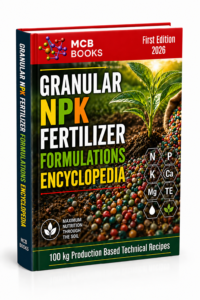
For professionals who want to develop precise, crop-specific formulations using real industrial data, the Granular NPK Fertilizer Formulations Encyclopedia provides detailed 100 kg production-based recipes, raw material combinations, and step-by-step manufacturing guidance. It is an essential resource for creating customized, high-performance fertilizer products for modern agriculture.