How to Improve Herbicide Efficiency with Advanced Formulations
Improving herbicide efficiency is a major goal in modern agriculture, where maximizing weed control while minimizing environmental impact is essential. Advanced herbicide formulations play a crucial role in achieving this balance by enhancing the delivery, absorption, and performance of active ingredients. As agricultural challenges increase, manufacturers and formulators are focusing on innovative formulation technologies to improve herbicide efficiency and ensure consistent results under various field conditions.

One of the most effective ways to improve herbicide efficiency is through the use of optimized formulation systems. The formulation determines how the active ingredient interacts with plant surfaces, how it is absorbed, and how it performs in the environment. Advanced formulations such as microemulsions, suspension concentrates (SC), and water-dispersible granules (WG) provide better stability and more uniform distribution, leading to improved weed control performance.
Surfactants and adjuvants are key components in enhancing herbicide efficiency. These additives improve spreading, wetting, and penetration of the herbicide on plant surfaces. By reducing surface tension, surfactants allow the herbicide to cover more area and enter plant tissues more effectively. Adjuvants such as oils and humectants help retain moisture on leaf surfaces, increasing absorption time and improving overall efficacy.
Particle size optimization is another important factor in advanced herbicide formulations. Smaller particle sizes increase the surface area of the active ingredient, improving dispersion and interaction with target weeds. In suspension concentrate formulations, precise control of particle size helps maintain stability and enhances biological activity. This results in more effective weed control with lower application rates.
Controlled-release technologies are also gaining importance in improving herbicide efficiency. These systems allow the active ingredient to be released gradually over time, providing longer-lasting weed control and reducing the need for repeated applications. Encapsulation and nano-formulation techniques are examples of advanced approaches that improve the delivery and persistence of herbicides in the field.
Environmental factors such as water quality, temperature, and humidity can significantly affect herbicide performance. Advanced formulations are designed to minimize these effects by improving stability and compatibility. For example, buffering agents help maintain optimal pH levels, while advanced surfactant systems ensure effective performance even in hard water conditions.
Another key strategy for improving herbicide efficiency is the combination of multiple active ingredients or modes of action. This approach not only enhances weed control but also helps prevent the development of herbicide resistance. Integrated formulation strategies allow for better management of different weed species and environmental conditions.
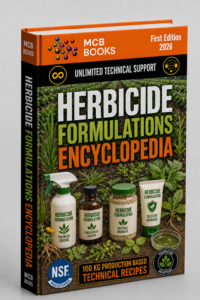
For professionals and manufacturers seeking detailed knowledge of advanced formulation strategies, the Herbicide Formulations Encyclopedia provides comprehensive insights into modern formulation technologies, raw material selection, and industrial production techniques used in the agrochemical industry.
In conclusion, improving herbicide efficiency requires a combination of advanced formulation techniques, optimized additives, and innovative delivery systems. By leveraging these strategies, manufacturers can develop high-performance herbicides that provide effective weed control while reducing environmental impact and supporting sustainable agriculture.