
Acid proof epoxy paint is used in industrial areas where surfaces need extra protection against acids, chemicals, moisture and heavy use. These coatings are usually produced as two-component epoxy systems and are commonly applied on concrete floors, metal surfaces and other areas exposed to aggressive conditions.
A typical acid resistant epoxy paint contains a solvent-free epoxy resin as the main binder, together with materials such as antifoam agents, wetting agents, fillers like barite, pigments such as titanium dioxide and other supporting additives. The second component normally contains a solvent-free epoxy hardener, and additional acid-resistant materials may also be included depending on the formulation.
The exact balance of these raw materials is important because the finished coating must provide good adhesion, surface coverage and chemical resistance. For this reason, acid resistant epoxy paints are widely used in industrial flooring, metal protection and other applications where ordinary paint may not provide enough durability.
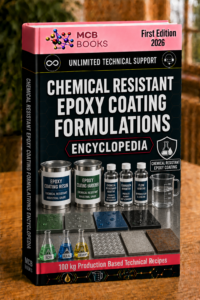
Looking for more detailed chemical-resistant epoxy formulations? Explore the
CHEMICAL RESISTANT EPOXY COATING FORMULATIONS ENCYCLOPEDIA for practical formulation examples, raw material guidance and production information covering acid-resistant, industrial floor and protective epoxy coating systems.
Main Ingredients in Acid Proof Epoxy Paint
A typical acid proof epoxy paint is built around a two-component epoxy system. The resin side normally contains the epoxy binder together with fillers, pigments and supporting additives, while the second component contains the hardener.
Materials such as barite, titanium dioxide, wetting agents and antifoam additives may be used depending on the required color, surface appearance and application properties. The exact raw material balance changes according to the level of chemical resistance and the type of surface to be coated.
Where Is Acid Resistant Epoxy Paint Used?
Acid resistant epoxy coatings are commonly used on industrial floors, concrete surfaces, metal parts and production areas where ordinary coatings may not provide enough protection.
They can be selected for factories, workshops, chemical handling areas and other industrial environments where resistance to chemicals and regular cleaning is important.
Acid Proof Epoxy Paint Formulation
A good formulation is not only about choosing an epoxy resin and hardener. The filler system, pigments and additives also need to work together.
The mixing order and compatibility of the raw materials can affect adhesion, surface finish, curing and chemical resistance. For this reason, commercial epoxy coatings are usually developed as complete systems rather than by adding acid-resistant ingredients to a basic paint formula.
Explore More Epoxy Formulations
If you are working on epoxy paints, floor coatings, chemical-resistant coatings or other epoxy systems, you can also explore our
category for more formulation and production resources.
Epoxy Manufacturing Books:
https://makingchembooks.com/product-category/epoxy-manufacturing-books/
Summary
Acid proof epoxy paint is mainly designed for surfaces that need more protection than a standard paint can provide. A typical system combines epoxy resin, hardener, fillers, pigments and performance additives to create a durable chemical-resistant coating.
The final quality depends on the formulation as a whole, especially the balance between resin, hardener and supporting ingredients.
For readers who want to go beyond a general overview, the
CHEMICAL RESISTANT EPOXY COATING FORMULATIONS ENCYCLOPEDIA
provides more detailed formulation and production information. You can also browse the Epoxy Manufacturing Books category to find additional technical books for the epoxy products you want to manufacture.