A good motorcycle engine oil formulation starts with the right balance of base oils and performance additives. Depending on the required viscosity grade and product performance, the formulation may include mineral base oils together with additives such as viscosity index improvers, pour point depressants, antifoam agents and other performance packages.
Motorcycle engine oil has to do more than simply lubricate moving parts. It should provide stable performance under heat and mechanical stress while remaining practical and economical for regular use.
The production process itself is usually straightforward once the formulation has been established, but the choice of raw materials and their proportions is critical. A reliable formulation helps determine which base oils and additives should be used, how much of each material is required and how the blend should be prepared during production.
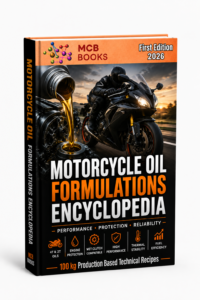
If you are working with motorcycle lubricants,
the
MOTORCYCLE OIL FORMULATIONS ENCYCLOPEDIA
provides practical formulation examples, raw material information and production guidance for different motorcycle engine oil products.
Choosing the Right Base Oil and Additive Package
Not every motorcycle engine oil is made the same way. The base oil system and additive package are selected according to the required viscosity grade, engine design and performance target.
Some formulations may rely mainly on mineral base oils, while others may use different base oil combinations. The additive system is then adjusted to support lubrication, oxidation stability, cleanliness, wear protection and foam control.
For motorcycles with wet clutch systems, the lubricant also needs to be suitable for the clutch and transmission requirements specified for that application.
Viscosity and Performance
Viscosity is one of the most important characteristics of a motorcycle engine oil. The finished product needs to maintain suitable flow at lower temperatures while still providing an adequate lubricating film when the engine becomes hot.
This is why materials such as viscosity index improvers and pour point depressants can be important in some formulations. Their role is not simply to change thickness, but to help the lubricant perform more consistently across different operating conditions.
Quality Control Before Filling
After blending is complete, the finished oil should be checked before filling and packaging. Typical quality control may include appearance, viscosity, density and other properties relevant to the selected product specification.
For commercial production, these checks help confirm that each batch remains consistent and meets the intended lubricant standard.
From Basic Production to Complete Formulations
Understanding the production steps is useful, but the real value comes from knowing how the base oils and additives are combined for different motorcycle oil grades and applications.
The
MOTORCYCLE OIL FORMULATIONS ENCYCLOPEDIA
provides practical formulation references and production guidance for a wider range of motorcycle lubricant products.
https://makingchembooks.com/product/motorcycle-oil-formulations-encyclopedia/
Summary
A reliable motorcycle engine oil formulation depends on the correct balance of base oils, performance additives and viscosity-control materials. The blending process itself can be straightforward, but product quality depends on choosing the right ingredients, using them in the correct proportions and following a consistent production method.
If you are ready to move from general production information to complete motorcycle oil formulations,
the
MOTORCYCLE OIL FORMULATIONS ENCYCLOPEDIA
offers a more detailed reference for developing and manufacturing different motorcycle lubricant products.