
When it comes to crop nutrition and your soil fertility plan, you need to make sure you’ve dotted your i’s and crossed your t’s. Checklists aren’t for everyone, but defining a clear process to ensure you are properly covering bases is critical in the execution of a successful nutrient management plan. Feel free to use and print the Soil Fertility Checklist below as your starting point.
❑ Soil Sampling and Testing
-
Sample in spring (if fall sampling was not done)
- This is the single best tool for fertility planning
- Use proper sampling procedures
-
Determine within-field variability
- This aids in avoiding under- or over-fertilizing
❑ Review Crop Production Records
- Review last year’s yield data and crop notes
- Review past deficiency symptoms and other growth problems
- Define all yield-limiting factors from last year’s crop
- Correct soil pH as needed
- Consider insect, weed and soil compaction potentials
❑ Know the Plant Nutrients
- Primary nutrients: nitrogen, phosphorus and potassium (used in the largest quantities by plants)
- Secondary nutrients: calcium, magnesium and sulfur
- Micronutrients: Nutrients used in very small quantities, such as boron, manganese and zinc, may need attention. Other micronutrients (iron, copper, chloride, nickel and molybdenum) require attention in some instances
- *Primary, secondary and micronutrients can all be researched in the Nutrient
❑ Set Yield Goals
-
Set realistic and challenging yield goals
- Yield goals should be set for each and every field
❑ Start with Analysis of Past Yields
- Evaluate management decisions and inputs that can be improved or changed
- Start a three-to-five year yield improvement program with a goal to improve yields 10 to 20 percent per year
❑ Options For Starter Fertilizer
-
Consider methods of application and placement
- Starter band placement may provide benefits in cool, wet springs, low-fertility situations, early planting and other high-stress situations
- The “starter effect” generally disappears during the growing season in high-fertility fields
❑ Consult Local Fertility Experts
-
Talk to your local fertility experts
- Many factors influence crop response to fertilizers. Local crop advisors, such as your fertilizer dealer, independent crop consultant, county agent or other supplier advisors, can provide invaluable advice when making fertilization decisions
❑ Finalize Nutrient Management Plans
- Consider all factors and produce a plan
-
Include the quantity, placement and timing of nutrient applications
- It is a best management practice to ensure adequate – but not excessive – nutrients are available to the growing crop
- Develop a plan to achieve both production and environmental goals
FERTILIZERS AND PRODUCTIONS
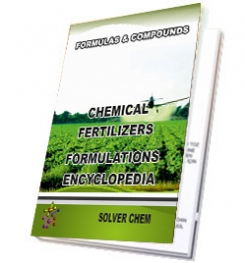
LIQUID OR SOLID FERTILIZER PRODUCTION is not very complicated. For the production, there is need usable and tried a formulation, raw materials and mixing tank. For raw materials to be used, quantities to be used and ingredients usage rankings, you should look into this formulation. Therefore, formulation and productıon methods of FERTILIZERS are important. If you have not a good formulation, you cannot make healthy and efficient production of any fertilizer.
If you need any manufacturing formulations and production methods about
any liquid and solid fertilizer,
CHEMICAL
FERTILIZERS
FORMULATIONS
ENCYCLOPEDİA
is enough.
This encyclopedia has many formulas about NPK fertilizers,NP fertilizers,liquid poliar fertilizers, powder fertilizers, granulas fertilizers, calcium and potasium fertilizers, special fertilizers, dripping fertilizers,foliar fertilizers, edta chelated fertilizers, micronutrients fertilizers,macronutrients fertilizers,chelated fertilizers etc.
All chemical fertilizers in the encyclopedia are producible easily.You need no help and no technıcal support. The encyclopedia is enough to produce chemical fertilizers itself.
CHEMICAL
FERTILIZERS
FORMULATIONS
ENCYCLOPEDIA
is written clear and understandable.
RELATED TAGS: What is powder fertilizer,what is complete fertilizer,what is incomplete fertilizer,what is balanced fertilizers,making complete fertilizer,formulation of balanced fertilizer,what is double fertilization, importance of fertilization in plants, making phosphorus fertilizers, how to make liquid phosphoric acid fertilizers, making phosphate fertilizer, properties of solid fertilizers, effects of dripping fertilizers, benefits of granular fertilizer, advantages of foliar liquid fertilizers, formulations of liquid drip fertilizer,compounds of phosphorus fertilizers, powder powder nitrogen fertilizers making, properties of solid liquid balanced fertilizer, complex fertilizer composition,using liquid micronutrients fertilizers, solid microelement fertilizers,using micronutrient fertilizers,plants to calcium fertilizers, micronutrients fertilizers in agricultural, how to make microelement fertilizers,making powder micronutrient fertilizers,micro elements fertilizers,properties of edta chelated fertilizers, liquid foliar fertilizers, to make ammonium nitrate fertilizers, preparation of liquid phosphate fertilizers, production of copper fertilizers, NPK fertilizer production,productions, types of chemical fertilizers,fertilizer types, solid foliar fertilizers,micronutrient fertilizers, combi fertilizers, manufacturing fertilizers,how to use chemical fertilizers, foliar fertilizers, drip fertilizers, NPK fertilizers, balance fertilizers, to make balance fertilizers,powder fertilizers manufacturing,granules fertilizer making,compositions of fertilizers, formulations of fertilizers, how to programme of fertilizers, using fertilizers.
AGRICULTURE ENCYCLOPEDIAS AND CONTENTS
E – BOOKS AND HARD BOOKS
HOW TO BUY
AGRICULTURE ENCYCLOPEDIAS AND VIDEOS
E – BOOKS AND HARD BOOKS
HOW TO BUY
AGRICULTURE ENCYCLOPEDIAS AND VIDEOS
👁️ Görüntülenme: 6