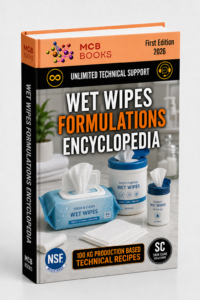
In professional wet wipe production, factors such as cleaning performance, skin compatibility, pH value, microbiological stability, fragrance, and the amount of moisture retained by the nonwoven fabric must be carefully evaluated.
Raw Materials Used in Wet Wipe Solutions
The main component of most wet wipe solutions is deionized or purified water. Water allows the other ingredients in the formulation to dissolve and ensures that the solution is distributed evenly throughout the wipe material.
Depending on the intended application, wet wipe formulations may also contain surfactants, moisturizers, preservatives, fragrances, botanical extracts, pH adjusters, solvents, and skin-conditioning agents.
Baby wipes and personal care wipes may contain glycerin, aloe vera extract, panthenol, and mild surfactants. Household and surface-cleaning wipes may include grease-removing agents, nonionic surfactants, solvents, and disinfectant active ingredients when required. Industrial wet wipe formulations are generally designed to remove more difficult contaminants such as oil, grease, ink, adhesive residues, and heavy dirt.
How to Prepare a Wet Wipe Solution
Before wet wipe solution production begins, the mixing tank, production equipment, transfer lines, and filling systems should be properly cleaned and sanitized. In the first stage, the required amount of purified water is added to the production tank. The mixer is then operated at a low or medium speed.
Water-soluble moisturizers, chelating agents, and pH regulators are added to the tank in the correct order. Surfactants should be incorporated slowly to minimize excessive foam formation. When the formulation contains botanical extracts, fragrances, essential oils, or other oil-soluble ingredients, they should first be premixed with a suitable solvent or solubilizing agent.
The preservative system must be added within the temperature and pH range recommended by the raw material supplier. After all ingredients have been added, the solution is mixed until a uniform and homogeneous mixture is obtained. Finally, the pH, appearance, odor, color, and clarity of the finished solution are checked.
pH and Preservative Selection in Wet Wipe Formulations
The pH value of a wet wipe formulation should be selected according to the intended use of the product. For personal care wipes that come into direct contact with the skin, a mildly acidic pH compatible with the skin is generally preferred. Surface-cleaning wipes may be produced at different pH levels depending on the required cleaning performance and the type of surface.
Water-based wet wipe solutions are vulnerable to the growth of bacteria, yeast, and mold. Therefore, an effective preservative system must be used, and the finished product should undergo microbiological testing. Simply adding a preservative is not enough. Its effectiveness must also be evaluated in relation to pH, temperature, packaging type, manufacturing hygiene, and compatibility with the other ingredients.
Quality Control in Professional Wet Wipe Production
The prepared solution can be applied to nonwoven fabric by spraying, impregnation, dosing, or saturation methods. The amount of liquid applied must be carefully controlled so that the wipes are neither too dry nor excessively wet.
Quality-control procedures should include pH measurement, appearance, fragrance, microbiological stability, fabric compatibility, packaging compatibility, and storage stability. Manufacturers should also check whether the wipes dry out inside the package and whether the solution is distributed evenly from the first wipe to the last.
Properly developed wet wipe solution formulations directly affect product performance, shelf life, safety, and customer satisfaction. For this reason, laboratory trials, stability studies, compatibility tests, microbiological analyses, and all necessary safety evaluations should be completed before beginning commercial production.