An acrylic waterproofing membrane is used to create a flexible, water-resistant layer on surfaces such as roofs, terraces, balconies and exterior walls. These products are usually supplied as liquid coatings and form a continuous protective film after application.
The final performance depends on the acrylic binder, fillers, additives and the balance of the whole formulation. For manufacturers, the important part is not only choosing the right raw materials, but also understanding how they should be combined to achieve good adhesion, flexibility and water resistance.
This article gives a practical overview of acrylic waterproofing membrane formulation and the basic manufacturing process used to produce these types of waterproofing products.
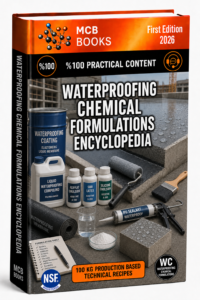
Liquid Applied Waterproofing Membrane Formulations Encyclopedia with practical formulations and production guidance for acrylic and other liquid-applied waterproofing systems.
If you are developing acrylic or other liquid-applied waterproofing products,
provides practical formulation examples, raw material information and production guidance for professional waterproofing membrane systems.
Why Formulation Quality Matters
The performance of an acrylic waterproofing membrane depends on more than the acrylic binder alone. The balance between fillers, pigments, rheology modifiers and other additives affects flexibility, adhesion, water resistance and application behavior.
For manufacturers, a repeatable formulation also helps keep viscosity, appearance and product performance consistent from batch to batch.
From Raw Materials to Finished Waterproofing Products
Once the raw materials are selected, the next step is building a practical production method around them. Mixing order, dispersion and final adjustment all influence the finished membrane.
This is why commercial waterproofing production usually requires both a clear formulation and a defined manufacturing process rather than a simple ingredient list.
Summary
An acrylic waterproofing membrane is a practical liquid-applied system used to create a flexible protective layer on roofs, terraces, balconies and other construction surfaces. Its final performance depends on the right formulation, suitable raw materials and a consistent manufacturing method.
If you want to move from general information to practical formulations and production guidance,