INTRODUCTION
Air fresheners may look simple from the outside, but behind every product that actually works, there’s a carefully designed formulation.
Whether it’s a spray, gel, or solid system, the goal is always the same:
to deliver a pleasant scent in a controlled and consistent way.
The problem is, many products don’t achieve this.
👉 Some lose their fragrance too quickly
👉 Others become unstable or separate over time
The difference usually comes down to how the formulation is built.
📘 Professional Formulation Knowledge
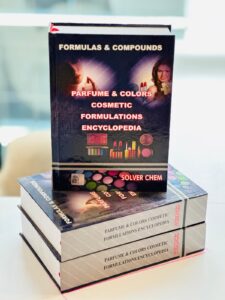
Perfume and Color Cosmetics Formulations Encyclopedia
If you’ve ever tried to create a product using random recipes, you’ve probably seen how inconsistent the results can be.
Working with structured formulation systems helps you understand not just what to mix, but how to make products that stay stable and perform the way they should.
HOW AIR FRESHENER COMPOSITIONS WORK
At the core of every air freshener, there is a simple idea:
combine fragrance with a system that controls how it is released.
Most formulations include:
- fragrance oils (the scent itself)
- solvents (to control evaporation and spreading)
- stabilizers (to keep the system consistent)
- fixatives (to extend scent duration)
👉 The balance between these components determines how long the fragrance lasts and how stable the product remains.
For a complete system overview, you can also check
Air Freshener Formulations Air Freshener Productions
DIFFERENT TYPES OF AIR FRESHENER PRODUCTS
Not all air fresheners are made the same way.
Depending on the format, the formulation approach changes:
- spray systems (fast effect, quick evaporation)
- gel systems (controlled release, longer duration)
- granular systems (slow and steady fragrance release)
- liquid diffusers
Each system behaves differently, which is why formulation design is so important.
If you want to go deeper into each type:
👉 Spray systems:
How to Make Air Freshener Room Spray Formulas
👉 Gel systems:
How to Make Gel Air Freshener Materials
👉 Long-lasting solid systems:
How to Make Air Freshener Granular Scent Formulas
WHY MANY PRODUCTS FAIL IN REAL USE
A lot of air fresheners seem fine at first but don’t perform well over time.
Common problems include:
- scent fading too quickly
- separation or instability
- uneven fragrance release
- inconsistent product quality
👉 These issues are usually caused by poor formulation balance.
WHAT MAKES A FORMULATION WORK
A better-performing product usually comes from:
- controlling evaporation rate
- selecting the right solvent system
- ensuring ingredient compatibility
- building a stable formulation structure
👉 When these elements are balanced, the product performs more consistently and lasts longer.
PRODUCTION OVERVIEW
From a manufacturing perspective, the process is relatively simple:
- preparing the base formulation
- adding fragrance in a controlled way
- mixing and homogenization
- adjusting stability
- filling into packaging
But here’s the key point:
👉 the process is simple
👉 the formulation is what makes the difference
Creating Products That Actually Sell
There’s a big difference between making something that “smells okay” and creating a product people want to buy again.
If you want better results, you need products that:
✔ last longer
✔ stay stable
✔ perform consistently
✔ meet real expectations
The Perfume and Color Cosmetics Formulations Encyclopedia brings together formulation systems that are used in real production environments.
👉 It helps you move away from guessing and toward building products that actually work.
👉 Most successful air freshener products are not created randomly — they are built on systems that are already proven to perform.
SUMMARY
Air freshener manufacturing may seem straightforward, but real product performance depends on formulation design. When the balance between ingredients is correct, the result is a stable, long-lasting, and consistent product that performs well in real conditions.