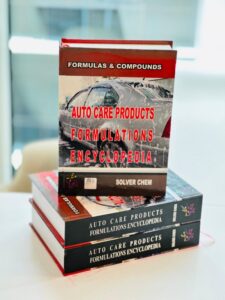
Car polish paste, often referred to as a polishing compound or rubbing compound, is a type of detailing product specifically designed to correct paint defects by leveling the clear coat surface through controlled abrasion.1
Unlike waxes (which only protect and add gloss), a polish actually removes a microscopic layer of the paint’s clear coat.2
Car Polish Paste Properties
The properties of a polish paste are dictated by its multi-component emulsion-based formula:
1. Abrasive Properties (The “Cut” Factor)
- Abrasive Materials: The core component.3 These are finely milled, hard particles suspended in the paste.4
- Common Materials: Aluminum Oxide ($\text{Al}_2\text{O}_3$), Silicon Dioxide ($\text{SiO}_2$ – Silica), Cerium Oxide, or various silicates (e.g., Kaolin).
- Abrasive Size/Hardness (Grit): Determines the “level of cut.”5
- Property: Larger, harder particles provide a coarser cut (for deep defects), while smaller, finer particles provide a finer cut (for finishing and gloss).6
- Property: Larger, harder particles provide a coarser cut (for deep defects), while smaller, finer particles provide a finer cut (for finishing and gloss).6
- Diminishing Abrasives (Advanced Property): High-quality pastes often use engineered abrasives that fracture or break down into smaller, finer particles as they are worked (rubbed/buffed).7
- Action: This allows a single product to start as a heavy-cutting compound and finish as a fine polish, leveling the surface and then refining the finish.
2. Physical and Rheological Properties (Consistency)
- Form/Appearance: Paste or thick, non-flowing emulsion (often a water-in-oil or oil-in-water blend).8 This consistency prevents rapid drying and provides excellent workability.
- Viscosity: Exhibits non-Newtonian behavior, often being shear-thinning (thixotropic).
- Action: The paste thins out and spreads easily under the pressure and movement (shear) of a buffing pad, but it retains its shape when sitting on the pad or in the container.
- Density: Typically $\approx 1.0$ to $1.1 \text{ g/cm}^3$ (similar to water or slightly denser).
- Ease of Wipe-Off: A critical performance property.9 A good polish should be easy to remove after buffing, leaving minimal, non-tacky residue, to prevent micro-marring from the wiping towel.10
3. Chemical Properties (Base and Additives)
- Carrier System: Composed of solvents and water in an emulsion.
- Solvents: Hydrocarbon solvents (e.g., mineral spirits, kerosene) dissolve greasy dirt and keep the paste workable by slowing water evaporation.11
- Water: The carrier for water-based emulsions and aids in cooling during machine polishing.
- Solvents: Hydrocarbon solvents (e.g., mineral spirits, kerosene) dissolve greasy dirt and keep the paste workable by slowing water evaporation.11
- Lubrication/Oils: Contains mineral oils and silicone fluids (various viscosities).
- Function: Provides a necessary lubrication barrier between the abrasive and the paint to control friction and prevent the abrasives from creating severe, uncontrolled scratches.
- Emulsifiers/Surfactants: Chemical agents (like nonionic or anionic surfactants) that stabilize the blend of oils and water into a homogeneous paste.12
- Wax/Sealant (in AIO type): Some pastes include natural (Carnauba) or synthetic (polymer/silicone) waxes to leave behind a protective layer.13
- Fillers: Low-quality polishes may use temporary fillers (oils, silicones) to mask light scratches and swirls, creating an illusion of correction that washes away over time.14 High-quality compounds are formulated to be filler-free.
Types of Car Polish Paste (by Level of Cut)
Polishes are primarily categorized by their abrasiveness, or “cut,” which corresponds to the severity of the defect they are designed to remove.15
| Type | Level of Abrasiveness (Cut) | Primary Function | Typical Defect Removal |
| 1. Heavy Cut Compound | High/Most Aggressive | Initial correction step; rapid material removal. | Deep scratches, heavy oxidation, severe water spots, clear coat sanding marks (e.g., 1000-1500 grit marks). |
| 2. Medium Cut Polish | Medium/Aggressive | Intermediate correction; follows a heavy cut or is used as a single step on moderate defects. | Swirl marks, moderate scratches, medium oxidation, light etching. |
| 3. Fine/Finishing Polish | Low/Least Aggressive | Final correction step; refines the surface for maximum gloss and clarity. | Haze, holograms, micro-marring, light swirl marks left by a medium cut polish. |
| 4. All-in-One (AIO) Polish | Low to Medium | Correct, polish, and protect in one step. | Light defects, cleaning, and leaving behind a sealant/wax. |
👁️ Görüntülenme: 48