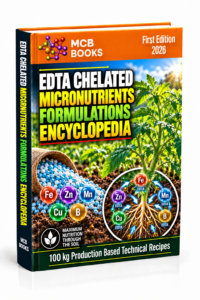
EDTA chelated micronutrients play a critical role in modern agriculture by improving nutrient availability, stability, and plant uptake efficiency. In industrial fertilizer production, EDTA (Ethylenediaminetetraacetic acid) is widely used as a chelating agent to bind essential micronutrients such as iron, zinc, manganese, and copper. This process prevents nutrient precipitation and ensures that plants can absorb these elements effectively, even under challenging soil conditions.
For manufacturers and agricultural professionals, understanding the formulation and production of EDTA chelated micronutrients is essential for creating high-performance fertilizers that meet global standards.
WHAT ARE EDTA CHELATED MICRONUTRIENTS?
EDTA chelated micronutrients are compounds where metal ions are chemically bound to EDTA molecules. This chelation process protects micronutrients from reacting with soil components that would otherwise render them insoluble and unavailable to plants.
Key micronutrients commonly chelated with EDTA include:
- Iron (Fe-EDTA)
- Zinc (Zn-EDTA)
- Manganese (Mn-EDTA)
- Copper (Cu-EDTA)
These chelated forms remain stable across a wide pH range, especially in slightly acidic to neutral soils, making them highly effective in agricultural applications.
INDUSTRIAL FORMULATION PRINCIPLES
Producing EDTA chelated micronutrients at an industrial scale requires precise control of raw materials, pH, and reaction conditions. The typical formulation process involves:
- Selecting high-purity metal salts (such as sulfates or chlorides)
- Dissolving EDTA in water under controlled pH conditions
- Reacting EDTA with the metal ion to form a stable chelate
- Adjusting pH to optimize stability and solubility
- Filtering and stabilizing the final product
Proper formulation ensures that the final fertilizer is fully water-soluble, stable during storage, and compatible with other agricultural inputs.
PRODUCTION PROCESS OVERVIEW
The manufacturing of EDTA chelated micronutrients generally follows a standardized process. First, EDTA is dissolved in water and neutralized using a base such as sodium hydroxide. Then, the selected micronutrient salt is slowly added while maintaining controlled temperature and agitation.
The reaction leads to the formation of a chelated complex, which is then stabilized by adjusting the pH to the desired range (typically between 5 and 7). After completion, the solution may be concentrated, dried into powder form, or formulated into liquid fertilizers depending on the intended application.
This process ensures high chelation efficiency and minimal free metal ions in the final product.
APPLICATIONS IN AGRICULTURE
EDTA chelated micronutrients are widely used in both soil and foliar applications. Their high solubility and stability make them ideal for:
- Foliar sprays for rapid nutrient correction
- Fertigation systems in greenhouse and open-field agriculture
- Hydroponic nutrient solutions
- High-value crops requiring precise nutrient management
These fertilizers significantly improve plant growth, chlorophyll production, and overall crop yield by ensuring efficient micronutrient delivery.
ADVANTAGES OF EDTA CHELATION
The use of EDTA in micronutrient fertilizers provides several important advantages:
- Prevents nutrient precipitation in soil
- Enhances nutrient uptake efficiency
- Improves stability across varying pH levels
- Increases compatibility with other fertilizers
- Supports consistent crop performance
Because of these benefits, EDTA chelated fertilizers are considered a standard solution in advanced agricultural systems.
SUMMARY
EDTA chelated micronutrients represent a cornerstone of modern fertilizer technology. Their ability to stabilize essential nutrients and enhance plant absorption makes them indispensable for efficient and sustainable agriculture. From formulation to large-scale production, mastering EDTA chelation techniques allows manufacturers to develop high-quality fertilizers that meet the demands of global markets.